Category: Revelatory Teaching

  • The Glories Upon the Earth

    Last night my wife and me were talking about a book I wrote in 2014 called The Breath of God. Today I wanted to post a blog concerning our discussion.

    The book was a divine inspiration God gave me over 30 days of being locked away with him. I wrote all 300 pages during that time. In the book the Lord showed me the book of Ezekiel and how in it is 4 distinct times the breath (Ruwach) of God came. In between these breaths there were certain glories that also were released because of the breath. Our conversation last night was about where we are at in the process.

    I am amazed by this pattern that has unfolded over the last 10 years. It is very distinct and once you grab hold of the revelation it is easy to see unfolding. But like many prophetic revelations God gives there are overlaps of time and cycles. There are also people at different maturity levels and understandings. But the patterns are there and continue to unfold whether we understand them or not. Here is a very brief overview of the 4 breaths and seven glories the Lord gave me:

    The first breath – First Glory – The Glory with The Captivity.

    Ezek. 3:12-13, 15 “Then the Spirit (breath Rawach) took me up, and I heard behind me a voice of a great rushing, saying, Blessed be the glory of the LORD from his place. I heard also the noise of the wings of the living creatures that touched one another, and the noise of the wheels… then I came to them of the captivity.”

    This is an illumination glory or an awakening glory. It is where God shines light into the hearts of men 2 Cor. 4:6. The Breath of God carried him to the place where the glory was. The frustration a watchman experiences is seeing the lack of relationship with the Lord that causes a lack of spiritual life. This is the same as the outpouring in the upper room, Acts 2:1

    The second breath – Second Glory – The Glory at The Inner Gate of The Temple

    Ezek. 8:3-4 “And he put forth the form of an hand, and took me by a lock of mine head; and the Spirit lifted me up between the earth and the heaven, and brought me in the visions of God to Jerusalem, to the door of the inner gate that looketh toward the north; where was the seat of the image of jealousy, which provoketh to jealousy. And,behold, the glory of the God of Israel was there.”

    It is a freedom glory bringing deliverance, expressiveness, outward manifestations because of inward work. Now the breath, instead of carrying him, lifts him to the place of second heaven. It is a glory above the glory of man upon the earth. This relates to the outpouring into the streets in Acts 2:5.

    The third glory – The Glory Moves to The Door of The House

    Ezekiel 9:3–4 — 3 And the glory of the God of Israel was gone up from the cherub, whereupon he was, to the threshold of the house. And he called to the man clothed with linen, which had the writer’s inkhorn by his side; 4 And the Lord said unto him, Go through the midst of the city, through the midst of Jerusalem, and set a mark upon the foreheads of the men that sigh and that cry for all the abominations that be done in the midst thereof.

    This is an honoring glory of His character. Honor opens doors and this is a glory of entrance. A glory that requires sanctification. This is the Acts 3 glory seen at the gate beautiful, which revealed the divine origins of God.

    The Fourth Glory – The Glory Fills the Court to the point of touching the Cherubim.

    Ezek. 10:4 “Then the glory of the LORD went up from the cherub, and stood over the threshold of the house; and the house was filled with the cloud, and the court was full of the brightness of the LORD’s glory.”

    This is His filling glory. It requires his Presence. It is his nature being formed within us. It is an Acts 4:31 moment and focus.

    Fifth Glory – The Glory Moves to The Eastern Gate

    Ezek. 10:18-19 “Then the glory of the LORD departed from off the threshold of the house, and stood over the cherubim… the wheels also were beside them, and every one stood at the door of the east gate of the LORD’s house; and the glory of the God of Israel was over them above.”

    This is a dividing Glory, a separation of holy from profane and an entering into the true holiness of God. It is a national purging glory. It is seen in Acts 5.

    The Third Breath and Sixth Glory – The Glory Moves to The Mountain on The East

    Ezekiel 11:1 (KJV 1900) — 1 Moreover the spirit lifted me up, and brought me unto the east gate of the Lord’s house, which looketh eastward: and behold at the door of the gate five and twenty men; among whom I saw Jaazaniah the son of Azur, and Pelatiah the son of Benaiah, princes of the people.

    Here we have another breath and again it lifts him. This is a covenantal alignment glory. A supernatural knitting of hearts for common purposes. A oneness of John 17. The forming of one new man and a corporate expression of a corporate man no longer divided but as one. These 25 men representing the Ecclesia or government of the city. We see this in the beginning of Acts 6.

    The fourth breath and 7th Glory – The Glory Fills the House he has built, and He is now in the House!

    Ezekiel 43:5–7 (KJV 1900) — 5 So the Spirit took me up, and brought me into the inner court; and, behold, the glory of the Lord filled the house. 6 And I heard him speaking unto me out of the house; and the man stood by me. 7 And he said unto me, Son of man, the place of my throne, and the place of the soles of my feet, where I will dwell in the midst of the children of Israel for ever, and my holy name, shall the house of Israel no more defile, neither they, nor their kings, by their whoredom, nor by the carcasses of their kings in their high places.

    Now the breath takes him. It is transparent glory or transcended glory. The corporate man is formed, and He is now dwelling in the house. We become a doorway to heaven as they peer into us, they see heaven because of our transparency. These will be outward expressions because of inward work. This is where the kingdoms of this world become the kingdoms of our God.

    Now as you can see there is much to each of these. I have watched the overall themes of these 4 breaths and 7 glories played out in real life. But where are we in the process? That was the discussion we had and that is where the discussion always seems to lead in the countless groups that have done book discussions and studies on “The Breath of God.”

    So, I want to help us understand exactly where we are. As I said, many are in different journeys of spiritual time and maturity. But God has a timetable as well and it continues to unfold. Some will know the times and seasons and others will experience times and seasons. Some will open and lead a season, and others will be the participants.

    As I see it from the one who got the original revelation, we are waiting for the third breath to occur. It is starting to come forth because of the indicators of the Glories that follow. Many are in the fourth glory and are experiencing new degrees of filling by God. Others are moving into the fifth glory and are seeing holiness in a new light. As a nation we are in a national purging right now. Decisions are being made for righteousness or what is profane. It is indeed a dividing glory. The fifth breath is focused upon the Eastern gate. To me this is symbolic of Washington DC. As the sixth glory is focused upon the mountain in the East.

    Still others are working towards a one new man and a corporate expression. They are forerunning the sixth glory. It has not yet come because there needs to be a breath of God first, but the pioneers and forerunners are already seeing the next place God is about to open.

    I know this all might seem very new to you and may be hard to follow but what I tell people is you must go in the spirit to the place the revelation came from to understand it. My quick summary is this. Some are beginning the third and fourth glory. Others are in the fifth and still others are forerunners in the sixth. These are the overlaps of people in different journeys. But I know we are all waiting for the next breath to come. We all are in one of the glories that is between the second and the third breath. The third breath we desire is not yet here because God is endeavoring to do something together with the corporate man and is giving time for people to get caught up.

    I hope this short teaching helps you in some way to see you are part of a grand plan of God. That our lives are connected more than we think. We are all heading to a single destination of spiritual life and may be experiencing frustrations of why the delay. I hope I brought some clarity of what God is working out in people who are at various stages. As I travel and speak, I see these different dynamics in separate groups. I can honestly say, oh God is working this in you because you are in this glory. My prayer is that you to can see this as well and hasten what God is doing in the earth.

  • The Lost Art of Tarrying

    As I began to do an in-depth study into the early Church, I wanted to discover the ancient paths that we have lost and they obviously had found. Amazingly, I discovered a very old but seldom taken path, the art of tarrying. For some it might be contemplative prayer, for others it is silent prayer and for others, it is meditation. Some would say it is the harp and bowl model and others would call it soaking prayer. But tarrying is more than any of these types of descriptions. Most of these are primarily focused around the presence of the Lord. But tarrying has both presence and divine purpose associated with it.

    Luke 24:49 (KJV 1900) — 49 And, behold, I send the promise of my Father upon you: but tarry ye in the city of Jerusalem, until ye be endued with power from on high.

    Jesus commanded them to tarry until a certain aspect would occur, to be endued with power from on high. The word ‘endued’ means to be wrapped in light or to be totally enveloped. It also can mean to be mantled. The word ‘power’ is the word dunamis and means grace, but also means the nature of God himself. He told them to tarry until this wrapping of God’s character and mantle was upon them.

    The definition of tarrying is to wait with anticipation and expectation, not to sit idle. Tarrying is worship, prayer, decree, studying, but all these are outward actions. Anticipation and expectation are issues of the heart. Jesus was essentially saying to them ‘go position your heart and keep it positioned until My character is mantled upon your life’!  The actions of worship, prayer, decrees, etc. help keep our heart positioned correctly but are not actually ways of tarrying. Tarrying is sitting with expectation at the feet of Christ.

    In the account of the upper room, they were given this commandment to go tarry. However, earlier, Jesus had asked them to come with Him as He tarried before the Father. Mark 14:34  My soul is exceeding sorrowful unto death: tarry ye here, and watch.   He asked them after finding them sleeping, could they not watch one hour, verse 37. He modeled tarrying as He had deep conversation with the Father concerning the destiny of His life and the redemption of the world. He was in agony as He poured Himself out before heaven’s throne and received final instructions. Yet when He returned, He found them all sleeping. This is much like the Church today. In our prayer meetings, 24-hour worship and prayer, etc., we tend to go through the motions but our hearts are far from Him. We need to be awakened and that is what true tarrying will do. It awakens you to God’s purposes.

    In the garden, Jesus invited them to tarry but at the upper room, He commanded it. This command was a necessary one as their hearts had proven in the garden to be far from the things of God. I believe God is again, not inviting us to this ancient path, but commanding us to come and tarry. The first invitation was for one hour. Imagine His disappointment then, but also even today, as many cannot pray for an hour even when giving God their wish list, all He wants is for us to come and sit and hear His heart.

    In Acts in the upper room, they went, not knowing how long they would be in the process. We know it to be about 10 days. A quick work was being accomplished. When it was finished, the purpose of God was formed inside of them and the nature of Christ was upon them enabling them to fulfill the assignment. You see, true tarrying has nothing to do with you and your needs and everything to do with God’s plan and purposes. It is a deep cleansing process and deep gut- wrenching moments as He reveals both our inadequacies and His divine nature. It is as if we are at odds with them and all our so called “prayer requests” hold no real value of being answered compared to the glory He is revealing to us.

    As we look at this time of tarrying, we see Peter arising and preaching the first message after being endued with power. It is roughly ten to fifteen minutes in length by what we see written and 3,000 converts were made. How many of us would be willing to tarry for 10 days, speak 10 minutes with such power from His nature, and see 3,000 added? Within 24 hours of the answer, there were 3,000 converts. We have lost the ancient path of tarrying before the Lord!

    Most of our messages are powerless and hold no real revelation. They do not prick men’s hearts and shift culture. We spend time in study and prayer but we must spend time in tarrying. Tarrying forms His nature within us, which empowers us. Tarrying enables our plans and message to be discarded and His picked up. Tarrying allows us to not just preach with enticing words, but to preach with power and signs and wonders.

    When Jesus slipped away to pray to the Father, He modeled tarrying more than any other things. He was having a dialogue with the Father and conveying His heart as He received the Father’s heart. He then came forth out of these times and moved in great power.  

    Acts 1:7–8 (KJV 1900) — 7 And he said unto them, It is not for you to know the times or the seasons, which the Father hath put in his own power. 8 But ye shall receive power, after that the Holy Ghost is come upon you: and ye shall be witnesses unto me both in Jerusalem, and in all Judaea, and in Samaria, and unto the uttermost part of the earth.

    These verses in Acts say again, what will happen in the tarrying.

    Times in the Greek is chronos meaning ‘measurable time, like minutes, hours, days’

    Seasons in the Greek is kairos meaning ‘divine moments in God He has ordained’

    (Own) Power in the Greek is exousia, which means ‘authority or the legal right’

    (Receive) Power in the Greek is dunamis, which is ‘the origin of the very nature residing’

    As we look at this, we can see that tarrying is going to produce something that is more important than even knowing times and seasons or even the legal rights because it will produce the living nature of Christ within us. Tarrying conforms our nature to His nature thus enabling us to move in the full power of the Holy Spirit.

    We have often pondered on what they did as they gathered for all those days. Did they reflect on scriptures? I believe they did, trying to find answers and explanations to what this power would be. We see Peter speaking from the book of Joel as a fresh revelation, which was possibly a recent place he had just read. Did they sing and worship? Probably, as they were excited to be counted worthy of this new dimension creating questions none of them could answer. Did they pray? I’m sure of it. They needed answers and I’m sure they were full of questions. Did they discuss Jesus’ words? Absolutely! His words were why they gathered. They probably had in-depth conversations about them and the possible meaning. The one thing we know happened is that they created an atmosphere to draw the Holy Spirit and created one accord. The act of tarrying has all these elements in it, not in the mechanical processes we tend to do, but in a living, life- giving and flowing purpose. The tarrying was for a reason, not just because it was something needing to be done. It was a container built by human spirits hungry for God.

    You see, their approach was not seeking results; this is called ‘search theology’, which is constantly looking for results to validate God. They knew there would be results. He had promised and commanded and spoke with authority that this would come to pass. They had a ‘harvest theology’, which means they understood the promise’s ultimate result would occur. Their seeking and the difference in tarrying over simply praying is; praying is searching while tarrying is knowing. Instead of them searching God, they were allowing God to search them. They were in a quickened process of obstacles being removed from their lives so they would not block the intentions of God. Now that’s real tarrying! They were at a critical moment of time, the second time the word ‘tarrying’ was asked of them. Let us go back to the garden and look at that time again to help us see the importance of tarrying.

    Matthew 26:38 (KJV 1900) — 38 Then saith he unto them, My soul is exceeding sorrowful, even unto death: tarry ye here, and watch with me.

    Tarry means “to continue”, “tarry”, “endure”, and translated miscellaneously five times. 1 to remain, abide. 1a in reference to place. 1a1 to sojourn, tarry. 1a2 not to depart. 1a2a to continue to be present. 1a2b to be held, kept, continually. 1b in reference to time. 1b1[1] to continue to be, not to perish, to last, endure. 1b1a of persons, to survive, live. 1c in reference to state or condition. 1c1 to remain as one, not to become another or different. 2 to wait for, await one.

    They had not become one yet. They definitely were not of one heart and soul and they still were not one with Christ. Jesus saw the lack in the human nature to understand spiritual things and the process needed to create that oneness. Imagine His disappointment as He came and saw them sleeping.

    Matthew 26:40 (KJV 1900) — 40 And he cometh unto the disciples, and findeth them asleep, and saith unto Peter, What, could ye not watch with me one hour?

    Here He is at the most critical part of His assignment upon the earth and He desires to share this moment with those closest to Him. Yet they are sound asleep. As I said earlier, this is the state of the Church and few in this hour are awakened. Even among those already awakened, few are tarrying and we wonder why things are not exploding. We are again at the most crucial moment in the life of Christ in the Church upon the earth. We are at a real point of death to self unlike anything we have ever seen before. Dying to self has become so cliché and has no meaning unless combined with tarrying before the Lord to receive His instructions. However, for those who do tarry like Christ did with His Father, there will be loosed a resurrection power that will far exceed anything we have seen and done. Our later years will be greater than our former and we will do greater works!

    Luke 24:29–30 (KJV 1900) — 29 But they constrained him, saying, Abide with us: for it is toward evening, and the day is far spent. And he went in to tarry with them. 30 And it came to pass, as he sat at meat with them, he took bread, and blessed it, and brake, and gave to them. 31 And their eyes were opened, and they knew him; and he vanished out of their sight.

    Another time the word ‘tarry’ is used is after the Resurrection and Jesus is on the road to Emmaus and meets two followers. They asked Him to abide but Luke wrote that He tarried with them. He did not spend much time yet suddenly their eyes were opened. You see the actions of Jesus tarrying created awakening. His tarrying had corresponding actions.

    We see another time that Jesus left the normal actions of life and tarried at a well. (John 4) The other disciples went to get food but as Jesus told them later in John 4:34 My meat is to do the will of him that sent me, and to finish his work”.  His tarrying at the well was intentional and had a specific result; it confronted a woman’s heart and brought healing with the overall results being the conversion of multitudes of Samaritans.

    As we begin to look further, we see times that Apostle Paul tarried as well. He specifically states that his tarrying would produce a certain result.

    1 Timothy 3:14–15 (KJV 1900) — 14 These things write I unto thee, hoping to come unto thee shortly: 15 But if I tarry long, that thou mayest know how thou oughtest to behave thyself in the house of God, which is the church of the living God, the pillar and ground of the truth.

    Paul tarried so the reverence he had would come upon others. He believed his tarrying would be a living example for others to follow. We might interpret this as his length of stay, but I see it as his length of time spent before God. After all, he could stay for a long length of time but if they did not see His actions before God, they would not have reverence. It was a specific type of tarrying that Paul did and he invited others into it to experience it.

    We know Jacob wrestled all night for God’s blessing. In my opinion, he was tarrying before the Lord. He did not know how the blessing would come or what it would look like but he did know not to give up. The scripture says he wrestled but the wrestling was probably more with himself and his responses before God. His act of both wrestling and tarrying allowed him to walk away marked by God for the rest of his life, a reminder of a turning point in his life.

    Daniel also tarried and fasted for 21 days to get an answer. Interestingly, his words were heard from the first day, but his tarrying was enabling the spiritual realm to be cleared so his answer could come. It appears tarrying faith can both put into motion and hold in motion the angelic host until the answer is brought forth upon the earth. Perhaps much of our spiritual warfare is not effective because we don’t really tarry in faith. Maybe it also has to do with our lack of fasting, another ancient path that has been lost or at least greatly diminished.

    Like all things, ancient paths require the right heart attitudes and motives to be effective. If our heart condemns us not, then we have confidence before God. If we are feeling condemned or are walking in sin, rebellion, or lack a desire to live a fully committed lifestyle of true faith, our confidence will reflect this. Confidence does not just come for us to feel good about ourselves but it comes to empower the desire to abide in God … to pursue His presence, to tarry until He comes.

    However, what else keeps us from tarrying before God? A prayer less life. Prayerlessness keeps us from tarrying because we might be confronted about areas of our life in need of change. God wants to deal with your heart BEFORE you tarry with Him. Notice I said with Him. Tarrying is about a discussion of partnership of God’s intentions into the earth. Prayer tends to be a more one-sided discussion as we make requests of God. Tarrying is God making requests of us! God wants to shift things in our personal lives and before tarrying can truly be effective, things must be confronted with prayer and worked through in our own walk with Him. Tarrying is for the corporate Body as prayer is for the individual. God does not want our times of tarrying to deal with our personal sin issues but the sin issues of a region, people group or nation.

    When we tarry before God, we are also tarrying before His holiness. We are seeing the beauty of holiness of which David so beautifully described. We are at a place of awe and reverence. If our heart is right, then tarrying shifts our position from entering into His holiness to tarrying in His holiness. We stay sustained in this place as a supernatural exchange occurs. We receive more of His nature and our nature fades. We understand His ways and paths because they are holy. We see the ravages of sin upon humanity and God’s overall love and plan. We are truly coming under His Lordship to be a tool empowered to make change. The actual degree of Lordship we see exercised today is directly related, I believe, to the amount of time spent before the Lord simply tarrying. When Lordship is lacking, a deep relationship is not in place. As you study the scriptures, the overall plan of salvation has little to do with the actual act of forgiveness and more about Lordship and the walking out of forgiveness under Lordship. I am not demeaning the work of the cross but simply stating it is the invitation and not the final destination of our walk with God!

    Tarrying is not about spending time to find or receive a blessing. God may or may not reveal that portion to us. Tarrying is about a transformation process. It is about a journey with Him. If you are struggling in tarrying and it is hard for you to simple sit for a length of time of say, two hours, then possibly you are still coming to the Lord with a blessing mentality. You will know you have made the true transition into fully tarrying when it becomes a joy instead of an obligation. When it becomes an expectation. The reality is, the ones who can tarry a long time have found a real secret ancient path. That is the tarrying is the blessing! This is the joy of being with Him, not asking anything of Him but His dialogue! Now that is joy unspeakable and full of Glory and the half has not been told!

    Micah 7:7 (KJV 1900) — 7 Therefore I will look unto the Lord; I will wait for the God of my salvation: My God will hear me.

    What we are tarrying for can be summed up in this “that a portion of His holiness would rest upon us.”

    1. Tarrying before God will enable us to be kept by the power of God.
    2. Tarrying transforms our nature.
    3. Tarrying before God will release hidden mysteries.
    4. Tarrying before God will cause clarity to come concerning spiritual truth.
    5. Tarrying can become a lifestyle and not an event.


  • Thought Life & And Paul’s Resurrection

    2 Corinthians 10:3–6 — 3 For though we walk in the flesh, we do not war after the flesh: 4 (For the weapons of our warfare are not carnal, but mighty through God to the pulling down of strong holds;) 5 Casting down imaginations, and every high thing that exalteth itself against the knowledge of God, and bringing into captivity every thought to the obedience of Christ; 6 And having in a readiness to revenge all disobedience, when your obedience is fulfilled.

    Philippians 4:8 – Finally, brethren, whatsoever things are true, whatsoever things are honest, whatsoever things are just, whatsoever things are pure, whatsoever things are lovely, whatsoever things are of good report; if there be any virtue, and if there be any praise, think on these things.

    Isaiah 26:3 – Thou wilt keep him in perfect peace, whose mind is stayed on thee: because he trusteth in thee.

    In the past few weeks many people have been in their thoughts and head space. When you’re in headspace you’re not in faith. The kingdom and its principles only work by faith not by emotional health or intellectual thought process. When our thoughts or emotions dominate then the kingdom becomes dormant. If the kingdom is dormant or asleep then spiritual awakening is not present.

    Our thoughts create the world we decide to live in. Our thoughts are so powerful they can make us believe things that are not true, and even distract us from the truth. Our thoughts can even create things that hold greater value to us than what God is creating. This wrong thinking causes our faith to activate to form what is temporal and even leads us to not be committed to Gods truth.

    I want to turn to the account of Paul’s life in Acts 14. Paul and Barnabas come to Iconium and have opposition. This opposition is coming from unbelieving Jews who are stirring up gentiles. Look at what the verse says:

    Acts 14:2 — 2 But the unbelieving Jews stirred up the Gentiles, and made their minds evil affected against the brethren.

    They made their minds evil. What caused this was because they were unbelieving. The word unbelieving means to be unwilling to be persuaded or to withhold belief and to withhold obedience. All of these are intentional decisions to do the opposite of what they knew to do. They were in rebellion that was coming directly from their thought life. The outcome was the Gentiles minds were made evil. The word evil means to do evil, to ill-treat, to embitter, to exasperate. It was so bad they turned on the brethren. The outcome of the offense was a divided city V.4

    Acts 14:3 — 3 Long time therefore abode they speaking boldly in the Lord, which gave testimony unto the word of his grace, and granted signs and wonders to be done by their hands.

    But Paul continued in the midst of division birthing, to continue in his assignment. Eventually the division formed pitting some with religious people —- some with the Apostolic kingdom group. It was so bad they wanted to stone Paul, which means execute him. So, Paul goes to Derbe and Lystra only a day’s journey on foot. Lystra is where Paul will choose Timothy for the mission (Acts 16) and it is here he first meets him.

    At Lystra Paul continues preaching and heals a crippled man. This time instead of praying and seeing healing he activates the man’s faith to stand. He has figured how to go beyond the minds and thoughts he just experienced, and to see faith supersede it.

    Image the thoughts going through Paul’s mind concerning all he is experiencing and seeing. Most people would draw back but Paul pressed forward. Not only is Paul fighting his own thinking he is also fighting people’s unbelief and a group of people wanting to kill him. But he is also fighting sickness in his own body as he touches on this in Galatians 4:13 as he speaks of first preaching to them having much infirmity!

    The crowd calls them gods specifically Jupiter and Mercurius which they worshipped because of what they saw. The miracle was so great they wanted to offer the sacrifice of an oxen instead of just small animals. But here came the group from Antioch seeking to kill Paul and kill people’s faith. This group followed Paul for a season.

    Acts 14:19–27 — 19 And there came thither certain Jews from Antioch and Iconium, who persuaded the people, and, having stoned Paul, drew him out of the city, supposing he had been dead.

    Stoning was for blasphemy, among other things. It was not seen as a punishment by hitting someone with a few stones but was a form of execution. The person stoned would be checked for 3-5 minutes to be sure they were not breathing. Then the person was drugged outside the city to rot. Paul states in 2 Cor. 11:25 he was stoned and in verse 23 he was “in deaths often.” Paul could be stating he died and was resurrected many times.

    20 Howbeit, as the disciples stood round about him, he rose up and came into the city: and the next day he departed with Barnabas to Derbe.

    The disciples at this time were Eunice, Barnabus and a young emerging son called Timothy who was 15 years old. From this moment of resurrection Paul then writes later:

    Philippians 3:10 — 10 That I may know him, and the power of his resurrection, and the fellowship of his sufferings, being made conformable unto his death.

    The word conformable means to take on the same form or likeness, to come to be like him in his death. Paul after such an experience returns to the city and continues to preach and tells the disciples Through much tribulation enter into the kingdom of God.”

    We in the west do not want to enter tribulation to see the kingdom come. Tribulation means trouble, affliction, anguish. It means to be pressed up hard like grapes to get wine. But the outcome was that Paul established the church in that region. He ordained city elders. Paul also now had a working model of the church to be formed all over the globe coming out of the Acts 15 Apostolic counsel meeting.

    The deepest places of the power of resurrection is where the deepest tribulations occur. Looking back at how the thoughts of others could have stopped Paul. Paul’s own thoughts and infirmity could have stopped him. Anywhere along the way it would have been easy to quit and be justified in doing it. Yet without this confrontation of others thoughts and influences, the model of ecclesia God desired would not have the right foundations.

    Today let us not draw back when other people’s thinking opposes our kingdom assignments. Let us not allow opinions to dictate. Nor let our own thoughts of inadequacies or sufferings talk us out of our assignment. If you suffer because of your own poor choices is one thing, but to suffer for righteousness’ sake releases the power of resurrection.

  • Doubt and Unbelief

    Today I was in a restaurant having breakfast with some dear friends before I took off to the airport. I spoke about doubt and unbelief. As I was thinking on this later, I decided it would make a really good post.

    The bible tells us to not have doubt and unbelief. But what is doubt and what is unbelief? For some they assume they are one in the same. But they are two different areas that have two different outcomes in our life. If we are not to have doubt and unbelief, then we must have the opposites which are understanding and believing.

    We all have times of doubt and unbelief in our lives. One of scriptures that always has stood out to me is in Romans 4 were it talks of Abraham. It says when he became fully persuaded, he believed the promise of God not doubting. Which means there was a time he wasn’t fully persuaded and had to go through a process to shift out of doubt. Being persuaded occurs in both the areas of doubt and unbelief. One deals with how we think of applying promise and the other of activation of the promise and the outcome if it. ,

    Many people can have great faith but still have doubts if things will come to pass as promised. Others have deep assurance of promise, but their faith is lacking and hope the promise will come. If we are honest with ourselves, we all have been on both sides of this having doubt and great faith,  and also times having no doubt but lacking in faith.

    When we think of doubt we are dealing with assumed facts in the mind and how we perceive those facts working out. Facts are only conclusions based on inputs. We may or may not have all the inputs because facts are the best educated guess. When we think of unbelief, we are thinking of truths not fully developed. Truths of God that are sovereign and even can be spiritual law’s and promises. I see these truths as non-negotiables. This means doubt cannot and should not negotiate the outcome truth is trying to bring.

    We see Abraham became fully persuaded, meaning the facts he was faced with, which are stated as the deadness of both his and Sarahs bodies, had to give way to the truth promised by God. God wasn’t moved by the facts and could even create new facts to dismiss doubt, hence their bodies were regenerated into the ability to bring forth a child of promise. But this was created by faith. It came down to what was going to rule and how Abraham would submit. He had to bring the final doubts under his spirit believing what God said was true. When this occurred, he was fully persuaded. It’s amazing of the power both the mind and the spirit have to create or deny. 

    Doubt occurs in your mind while unbelief occurs in your spirit. Doubt comes by your thoughts and the imaginations of your mind. It is how you perceive things and what you do with random thoughts. It is what you assume and what you fear. Doubt has a foothold in what we think on consider and ponder.

    Doubt comes to diminish hope and even to dismantle hope. It comes to put hope aside. If hope is removed, then faith has nothing to create the evidence of things hoped for. You see doubt is as powerful as faith but has the opposite result. While doubt occurs in the mind, unbelief occurs in your spirit. Unbelief is not believing or engaging in spiritual truths that governor all things. Unbelief stops your faith working as well. It does this by not fully embracing truth by faith. Unbelief working hand in hand with doubt diminishes the possibilities of God and causes us to contemplate instead of engaging.

    This is why Apostle Paul tells us to be careful what we hear. He also said to take every though captive to the obedience of Christ. Casting down imaginations and everything that exalts itself against the knowledge of God. The knowledge of God is found in the truth of God. The imaginations are found in our mind. The real stronghold we are fighting is in our thought life. Whatever we allow to dominate will also create our reality. We can have facts, or we can have truths. We can have information, or we can experience life. We can have intellectual ascent or spirit ascent.

    I hope this short teaching will provoke you to take a look at the possibility of your own areas of doubt and unbelief and turn them around to be assurance and full faith believing. Like Abraham its time we become fully persuaded of some things in our own lives.

  • Why Revival Isn’t Enough: The Power of Awakening in The Faith

    Today we see three words being used at times almost interchangeable. Awakening, revival and reformation. Lately reformation seems to not be as dominant as it once was. All three are very different in both outcomes and what we are talking about. We really need to understand our terminology better. Perhaps it’s due to the loss of our vocabulary over time. At the time of Shakespeare, the vocabulary used daily was 54,000 words. Todays modern culture it is reduced to 3,000 words. Because of this we lump words together to have a similar meaning.

    The terminology we use causes us to not be on the same page as well. A revival many times has a great stirring of emotions to stir up the loss of passion for the Lord. Really it is saying we have lost our first love. Many revivals also have a heightened time of the gifts of the spirit moving as well. But these should be normal Christian life. When we look historically, we see locations where past revivals occurred are historically actually worse 100 years later than at the time before the revival. This is due to the fact of outward influences that caused the revival have been removed. So, there isn’t anything to build upon. Revival means to return to a former state of being or to revive such as to raise from the dead.  That is a sad state of affairs to say we need a revival. It means we have lost the life we once had and need to return to it. We should never get ourselves into such a place.

    Awakening is an internal moment an individual has that forever changes them. It means to get out of sleep, or to come alive to a new understanding. It affects how we see God in life and affects our perspectives, what we put effort and energy into and affects the people around us. If enough people experience awakening, we call it a great or mega awakening meaning enough individual people being awakened during a set time has reached a mass affect upon culture. This is when bars are closed, and people’s lifestyles are changed for the better. It becomes a cultural shift. Many of the past revivals were awakenings that occurred. These caused cultural reformation and realignment. Revival generally touches a smaller group, while great awakening touches the masses. Awakening being internal has a lasting effect and carries a foundation to build upon.

    Do we see patterns of revival or awakening in scripture? We really don’t see revival. What we do see is an ongoing awakening. Even when things seemed stagnated or at a pause, another moment of seeking God produced a new insight in what to do, an awakening to a new dimension of faith unfolded.  The church actually moved from one awakening to the next progressively. New revealing of truth happened and new experiences because of that revealing unfolded. It was going from glory to glory. This happens every time we read the word of God, and something is highlighted to us by the Holy spirit. We are awakened to another dimension of God we never knew. We constantly experience awakening on a daily or weekly basis.

    The early apostles were very adamant to maintain authenticity to the original awakening truths. We see this in Acts 4 where they continued steadfast in the apostle’s doctrine. There are several written works concerning these truths and maintaining them. Polycarp, who was a disciple of Apostle John was one who tried to maintain what was most important that John and told him. He was eventually burned alive, and the flames did not consume him, so they drove a stake through his heart. Ignatius was another disciple of John who also maintained the integrity of the original truths. Both of these men made sure the apostle’s doctrine was documented correctly. Even in this second-generation of apostle’s people were already beginning to shift the scriptural understanding. By the third generation a battle with men’s influences was beginning, trying to bring men’s opinions into true spiritual faith and taint it. These times of sightly drifting from truth had an effect. It began a realization over time of missing something that had once been. This was the beginning of the modern-day revival mindset we have today. In all honestly it seems what we do as revivals today is actually “living faith outside the walls” more than finding what was lost. Revivals as we now know is really a new thing started in the 1700’s. They believed men had lost faith in God and focus on God was lacking terribly. They held meetings specific for people to either renew faith or experience it for the first time. Really it was more of an awakening than a revival.

    When it comes to revival or awakening, I am more concerned about the fruit that is being produced. I am looking at 2 things in this. One does the outcome last and can I taste Christ within it. Second does it have the seeds to reproduced Christ, so he is multiplied. Does it have the longevity and legacy the early fathers were looking for in people’s lives? These things are kingdom minded and advancing.

     Am I against revivals? I see it as something we should say we will work towards to not being needed. Our mindset should be that it is revealing something more detrimental than a fix to our current situation. Should our focus be on the church? Yes, to make sure it is in constant awakening. This requires an ongoing kingdom revelation to be allowed to flow. We must challenge people to pursue growth and their own disciplines.  Do I think we need to change our terminology? Absolutely.  We will, once we see ourselves different because we see constant awakening occurring in our own lives.

  • Defining Biblical Church

    Today we have many different concepts of church. We have the biblical definition of the ecclesia. We then have differing opinions of the original Greek word. We then have denominationalism and the 45,000 flavors and branches and splintering’s. Yes, you read right 45,000. Then we have the moral mixture of LGBT etc. We then have the different tags of seeker friendly, hyper grace, Pentecostal, Charismatic, Kingdom, Apostolic etc. As we look at each of these how do we really know if it is a church by Gods standards. After all that is what really counts.

    In each of these can be found a measure of truth. Some are closer to full truth than others. Some have mixed truth with personal preferences. Others have a mixture of truth and man-made doctrines. Still others just have manmade structures. An unbeliever is becoming increasingly confused about what to believe as we keep allowing cultural influences to define what we believe. We are close to going over the edge of just having an open believe system.

    Part of this is due to no apostolic bible-based accountability. Another part is secondhand truth due to a busy society that demands more time than we have, so our pursuit of studying Gods truths is secondary. It also is due to so many translations of the bible which have moved from word to word to thought to thought to paraphrased and finally opinion.

    So, I want to endeavor to give you what the Holy Spirit said to me on this. I have tried to define the church we see or should see many times. I see the unbalance and not conformity of one new man in the body of Christ as well. I start the journey looking at the original intentions of God in the church birthed at Pentecost. The first church everyone was truly born again, truly water baptized and received the mind of Christ, truly was filled with the spirit. This way they saw the kingdom John 3.3 and entered the kingdom John 3.5. These three things were foundational and authentic. They also brought union with Christ and formed one body around the understanding of these truths and the experiences these truths brought. No one in the early church had a belief of not being spirit filled.

    Just because the name church is on the name and the IRS papers are filed does not automatically make something Bible based. It does make them recognized as a religious organization or institute. I believe this definition would cover the majority of what we see with signage and religious rituals and practices. The question I have is do we think Jesus and the early apostles would approve the current definitions of church?

    Many people are in pre-new birth, seeking and practicing religion, but not placed in the true one body. Religion binds the individual to a hopelessness of sin. “The Faith” frees the person into a kingdom destiny and purpose. What seems to go on is people deciding what is the best fit for what they belief vs being fit by how God would fit them in. The early apostles would die for “The faith”. Wonder how many leaders of religion and faith are willing to die for what they believe? Maybe that sorts some things out as well.

    The church today is like the church of Thyatira in Rev. 2:18. We have done many things and have kept people busy doing things. Works, charity, service, faith and patience are all listed in the Rev. 2:19. But works is listed twice. We have gotten caught up in the activity of ministry. The superstardom of ministry. We have allowed Jezebel, which is a spirit, room in our activities. We have created false prophets and even false ministries. We have not solid doctrine V.24. But I think most of us can sort out what is wrong. But can we find answers that are correct or give better definition?

    1 Corinthians 12:12 — 12 For as the body is one, and hath many members, and all the members of that one body, being many, are one body: so also is Christ.

    The Christ is the Head and we are the members of one Body. Christ does not join himself to a harlot, or a prostitute. He joins himself with those who have been redeemed. The body is not all who say they are even Christian. The body is all those born again and have started the journey of salvation, walked away from sin, and embraced the provision of the finished work of the cross. This defines the activity of redemption that leads to the infilling of the spirit. These two are the beginning definition of the church or ecclesia as we know it. As we remove church from our vocabulary of what we currently say is church and say Body of Christ it becomes even more evident of how God may view what He is building. His goal is to build a body into a governing dimension he called ecclesia. Now we have a third definition.

    Ephesians 4:1–7 — 1 I therefore, the prisoner of the Lord, beseech you that ye walk worthy of the vocation wherewith ye are called, 2 With all lowliness and meekness, with longsuffering, forbearing one another in love; 3 Endeavouring to keep the unity of the Spirit in the bond of peace. 4 There is one body, and one Spirit, even as ye are called in one hope of your calling; 5 One Lord, one faith, one baptism, 6 One God and Father of all, who is above all, and through all, and in you all. 7 But unto every one of us is given grace according to the measure of the gift of Christ.

    The Holy Spirits focus is not just on the individual as separated from others but as connected to the whole corporate one new man being created. The Holy spirits role is to build “One New Man”. The Holy Spirit knows this will be the full expression of Christ. This new man is created in holiness, because of the process of redemption and Holy spirit infilling and activity. This is not embracing any and all belief systems for the sake of unity. Unity is no concern to God but union with Christ. This is the fourth definition, who is reflecting union with Christ and reflecting his image, and not a tainted image of our preferences or own belief system.

    Ephesians 1:23 — 23 Which is his body, the fulness of him that filleth all in all.

    His body is the expression of his fulness. This fullness fills each other as we gather. The whole connected body that is filled to full with Holy Spirit is “The church” and there is no other church. So, what Holy Spirit showed me is the biblical definition of church is:

    A redeemed body that is reflecting and evolving, regenerating and reproducing the very image of Christ not just each individually but corporately. This is done by the regenerating work of the Holy Spirit forming the exact image of Christ individually for a corporate expression. Once that image is formed, they become an ecclesia that is ruling and reigning. This is the only church that God recognizes, which is first a living Body filled with the life of God according to biblical president and truth. The Holy Spirit first introduces Christ into the believer, and in so doing He is forming in all who believe one Christ, constituting one Body, and that is the Church as in the New Testament. It must be redeemed, it must be filled with Holy Spirit, it must come into governing, it must reflect Christ image.

    You see it not the things you do…. It is the reflection of Christ and the Holy spirits activity. Without these you are apostate. It is the battle between Freedom verses Religion and Life verse Ritual.

  • Fullness of Christ

    I’m wanting to take a moment and write on the theme from our last conference “Pursuing the Fullness”. I never really taught, due to the flow of the conference, so I decided to briefly touch on some things from my notes I had prepared. I want to start with some background of the book of Colossians. Paul writes to the church because the environment they are in is full of Gnostics. They believed in different lengths of time called eons and divided power into these time segments. They were saying Christ had his time of power and that power no longer existed as he has passed. They were trying to lessen his spiritual position making him equal to deities they worshiped in times past. As Gnostics they worship a huge number of deities. It was a type of demonic worship of Christ. Paul opens the book talking about the supremacy of Christ and how he is above all principalities and powers and is the supreme creator whose power and fullness has always been. He was separating hm away form Gnostic theology.  Paul states in Colossians 1:16 -17

    1. By him all things were created
    2. All things are created for him.
    3. He was before all things.
    4. By Him they consist or are held together
    5. V.18 he has preeminence — or holds first place amongst all suprem or the supreme being.

    Paul states that Christ power from the Godhead is the total of all lengths of time. Fullness is directly connected to eternity which has no time as we know it. He brings the point out that fullness of Christ is not dependent upon time but upon decisions. It is all available in fullness at any moment.

    Fullness has a focus of eternity, and all eternity holds. Eternity is impacting all things because all things are held by and are part of eternity. Within eternity is fullness or completeness. God sent His Son so that we could partake of heaven’s fullness and all that it offers. When we step into eternal things, we are stepping into a grand fullness of God. All that He has and things we don’t even know exist, are now available. The impossible becomes normal and what we need is already done and finished. We are finding an ancient path that many others have found. That path is that when we step into fullness in Christ we hit overflow of heaven or eternity upon the earth.

    Colossians 1:9 (KJV 1900) — 9 For this cause we also, since the day we heard it, do not cease to pray for you, and to desire that ye might be filled with the knowledge of his will in all wisdom and spiritual understanding.

    Paul uses the word “Filled” for how he is praying for them. Filled here is the Greek word pleroo which is a verb means to cause something to be filled. His desire is for them to be filled with knowledge of His will concerning the sovereignty and power of Christ.

    Colossians 1:19 (KJV 1900) — 19 For it pleased the Father that in him should all fulness dwell;

    Then in Verse 19 he uses a different word coming from filled, fullness. Fullness is slightly different in the Greek – pleroa which is a noun meaning to fill up completely. He said this completeness is dwelling or established and settled in Christ. This word is the end result of pleroo or the action of filling. In other words, Christ has attained this fullness already.

    Paul states: He was Head of all principality and power in the sense that He was the Son of God’s love, and that He was one eternally with God in the Godhead. The fullness of the Godhead was in Him in bodily form. This means not only is Christ present in us but also the Holy Spirit and the Father.

    Colossians 2:6–10 (KJV 1900) — 6 As ye have therefore received Christ Jesus the Lord, so walk ye in him: 7 Rooted and built up in him, and stablished in the faith, as ye have been taught, abounding therein with thanksgiving. 8 Beware lest any man spoil you through philosophy and vain deceit, after the tradition of men, after the rudiments of the world, and not after Christ. 9 For in him dwelleth all the fulness of the Godhead bodily. 10 And ye are complete in him, which is the head of all principality and power:

    Paul then uses both words for fullness again. Pleroma of the Godhead. Meaning complete fullness. It means that there is no longer a need for filling because it has reached full capacity, so the action is no longer needed. Then he says we are complete in him. Complete is pleroo is a verb meaning an action is happening. It means accomplishment, bring to realization, to perform, to render perfect. We are lacking nothing because of this fullness is in us. If Christ is in us then the fullness he is, is also within us. If Christ is in us the deity of God is living in us!

    Paul talks of the fullness as he talks of the Godhead in Colossians as he explains the sovereignty and fullness of Christ.

    Colossians 2:9 says, “For in Him dwells all the fullness of the Godhead bodily.”

    Godhead in these verses is the word Theotes denoting the deity of Christ. It describes the sum total of deity and the fullness that is no longer needing added to but already has attained. It describes to the highest degree of what is available as we see Paul writing about Jesus being above all things. It really is a state of being. So as the Godhead was resident in Christ so was the state of being of the deity. Then as Christ is in us the power to sustain the state of being is also present. 

    The Greek word for Godhead is theotes, which is very similar to the Greek word theiotes used in Romans 1:20 for divine characteristics with only a one-letter difference. Now this becomes important as we read the following verse.

    Romans 1:20 (KJV 1900) — 20 For the invisible things of him from the creation of the world are clearly seen, being understood by the things that are made, even his eternal power and Godhead; so that they are without excuse:

    Here the word Godhead is Theiotes which denotes the divine characteristics manifested through the created things. His divine character, not His deity, created all things. That same creative nature is resident within us, the nature of Christ. This aspect of divine nature is the activity of fullness or the act of measure upon measure happening until fullness is attained. We see this in creation and is ongoing today. Some aspects of creation have reached fullness and others are still moving towards it. This is the power of then nature or Dunamis, Paul talks of working in us.

    But also in Christ is the deity of God, the fullness and completeness of a finished work. As Christ was upon the earth the finished work of God or fullness of the deity had come to the earth. That portion is also within us. When we received Christ, we received his fullness. As we live our life in Him, we are unlocking measures leading us to fullness. This is indeed the greatest mystery we have that is unfolding in our lives.

    Ephesians 4:13Till we all come in the unity of the faith, and of the knowledge of the Son of God, unto a perfect man, unto the measure of the stature of the fulness of Christ:

    The role of five-fold graces is to bring the body of Christ to fullness. But fullness comes in measures. But many never reach this fullness because they have settled for measure. When wereceived or accepted Christ, we didn’t just accept provision for sin. Nor did we accept an eternal destination, or even sonship, inheritance, or holy spirit activity. Though these things are true there is still more. We accepted HIS FULLNESS!

    Fullness is Gods ending concerning anything! But we seldom pursue the ending, we settled for the relief. We can stop at false finish lines or false fullness. It’s really stopping at a measure and not fullness.

    • Many stop at conversion.
    • Some stop at knowledge.
    • Some become content with how their life has changed.
    • Many stop at traditions.
    • Many stop at truth or portions of truth.
    • Many stop at an experience in God.

    Many of these stopping points are moments or moves in God and become a false finish line that is constantly being resurrected. The fullness of God is a result of discipleship by God’s Holy Spirit that produces a transformational anointing. That transformation is taking a measure (metron=limited portion of Christ’s nature) into the fullness (pleroma=the totality of divine powers at work in the transformation of a believer). We are progressively trained, equipped, and maturing in the nature and character of Christ while on this earth through discipleship and impartation of grace coming from the 5 gifts of Ephesians 4. Paul alludes to this operation at the end of Ephesians 1.

    Fullness is not our future, but it shapes our future. The outworking of the degree of our fullness is the fruitfulness of ministry we will accomplish. Fullness can be described as our present level of living in the presence of the Lord, as we live in obedience to His voice and his written word. We need to allow the function of the five-fold graces to operate under a different paradigm that we currently have. This is a current weakness in the Apostolic and Prophetic graces. We still have dysfunction of operations because we are trying to fit apostles and prophets into current ecclesiastical structures. Still building in traditional approaches and not through true apostolic and fathering grace. Apostolic is the release of the creative forces of the fullness to make the shifts required in culture. Our current context and focuses upon apostolic structures does not bring or mature the body into the fullness we need.

    But God manifest when we decide to pursue the next measure of fullness he wants to bring. We keep in motion from measure to fullness and from glory to glory. So, the key to living in fullness is to never settle for the current measure or level of fullness that we are experiencing, but we must move with God each time he moves in our lives. We need to contend for the fullness that rest in Christ.  

    John 1:16 (KJV 1900) — 16 And of his fulness have all we received, and grace for grace.

  • Thoughts from an Awakened Heart

    Thoughts from an Awakened Heart

    Here is a portion of my book “The Awakend Heart”.

    …. In this visitation, God woke me up at 3:30 AM . He had been preaching to me while I slept and then gave me these points to share with others. He also gave me the Scriptures to go with each section.
    1. Expectation releases the supernatural deposit within us. It comes from within the vessel be it a vessel that is unsaved or saved Acts 1:1-7— 2:1.
    The Lord showed me that saved or unsaved, that he had deposited expectation within every vessel. That we did not have the ability or the expectation within ourselves to seek him or hunger after him before we knew him. That this expectation deposit was what enabled us to experience salvation. This expectation enabled us to understand our need for God. He had put that expectation within every man, woman, and child to know God. Like David, every person has a hope within them. Even the vilest person has this deposit of hope or expectation abiding within. God showed me that no matter what a person says, excuses they make, or actions they display, deep within, is his expectation for himself that he deposited. The Lord showed me this is a key to unlocking any person’s heart.

    2. Fresh expectation always will produce the suddenlies in our lives. Mal 3:1, Acts 2
    Lord showed me that every ‘suddenly’ in our lives did not just occur but was the result of the release of expectation within us. He showed me that expectation also had creative ability within it that released the suddenlies that we see in Scripture. He showed me that as we walk in life, we always have an expectation of the day. That expectation is releasing things around us and putting them in motion towards us. But he showed me that a fresh expectation is what releases the suddenly. Fresh expectation is a collision of our faith with God’s hope.

    3. Expectation sometimes comes for a service as people begin to gather, that is why messages sometimes do not come until the last moment. Acts 3:5
    The Lord showed me that many times messages must change at the last moment before being presented. It’s due entirely to people’s expectation that they release. He showed me that leaders must be willing to change their message at any given moment because people’s expectations are shifting. He showed me that when everyone’s expectation becomes the same that is when His glory can invade. This synergy is when everyone’s faith and hope collide, allowing God to descend in a certain way to meet with everyone as if they were one person, body, or voice.
    4. When expectation shifts from an event to a daily lifestyle then revival has come to the people of God. Some can be in revival while others are not. Acts 3:5
    The Lord further expanded this by this statement. He showed me that revival, awakening, or reformation is depended upon a daily expectation more than a weekly event. The reason we are not seeing the results that we are looking for in the Church is because most of the Church only has an expectation for a single service each week. Revival, awakening, or reformation all has the makeup of daily expectation. The Lord showed me Paul’s daily expectation and how he walked in it. The release of daily faith caused the revival, awakening, and reformation of the early Church to occur daily not weekly.
    5. Awakening is the when the expectation of the Church exceeds the unbelief of the community. Acts 12
    The Lord showed me a community that has been completely changed because of the Church. He made the statement above and spoke to me that the Church’s expectation has to exceed the unbelief of the community. He showed me that when we realize the expectation is not from us but from him, he would change our perspective of what we would believe could really happen within a community. The awakening in a community is not about unbelievers getting saved at the church, but the Church coming into her realization of who God really is. He showed me how Peter was put in jail but that the Church’s expectation of God was greater than what held him. Even then, unbelief was rampant in the Church. He showed me expectation of the few gathered to pray exceeded the unbelief of the many. He told me not to worry about the numbers. But to make sure that the few were in unity and had the same expectation.
    6. Expectation is hope. Faith is putting expectation in fullness. This is why expectation releases revival. The Church’s hope in God and His ability to perform His covenant exceeds the world’s state of hopelessness. Heb. 11:1
    The Lord showed me that expectation carries the same dynamic and power as faith. He showed me that when we activate our faith we are actually putting in motion the expectation that he already has ownership of within our heart. This great hope exceeds the hopelessness of the world. Hopelessness carries a certain degree of power but expectation released is as if the power is doubled because faith is involved. He showed me that expectation is based upon our understanding that we know He is about to perform His covenant. The Lord showed me that many understand the covenant but many do not understand how the covenant goes into action. He spoke to me that it is about faith and expectations are the keys that unlocks covenant……

  • The Burden of the Lord

    This blog could be the most important blog I have ever written. I am always looking for keys and challenges to present before the body of Christ. Many want the dynamics of the church in Acts but don’t know the mindsets they had, nor the seriousness of purpose. They did not live compartmentalized lives but lived their faith and then inserted life into it.

    What I see is today’s body is so fixated on themselves and their needs getting fulfilled week after week in meetings. We have made a self-perpetuating focus on ourselves with not much focus on the kingdom work at hand of creating image barriers. We have causes and programs associated with them. We pray and maybe even act upon so many moral and social convictions and yet seem to see such hard-faced battles with some results and maybe low to no results. What is missing? The answer is a God-sent burden.

    The early church had a very intense burden they carried for the work of God to advance. They had a burden for souls. This burden was so much part of their faith walk, that they only acted upon what they were burdened for. Today’s church has causes without burden, prayer with no burden, and programs with no burden. In all honesty, I see we don’t have much of a burden for anything. If we did much of what we do would have a huge impact.

    What you’re burdened with is what you will invest yourself into. It is what you will give time, resources, and even your heart. Without this burden, we are not aware of the spiritual climates and conditions around us. We also miss opportunities each day because we are not tuned in to the spirit realm, which is another thing a true burden from God will do, get us focused.

    I’m not talking about your pet projects or your passions. I’m talking about an apostolic burden, or a burden sent by God to send you out from it. I’m talking about something that you cannot accomplish unless there is a dependency upon God. A true burden will be an activator of true faith. It will reveal God’s righteousness and create His justice.

    Paul was burdened for the church:

    2 Corinthians 11:28 (KJV 1900) — 28 Beside those things that are without, that which cometh upon me daily, the care of all the churches.

    The word “comes upon” means something clearly identified, anxiety, pressure and concern, responsibility, oversight. He was not pushing off the burden God had assigned him.

    Paul was burdened for his kinsmen:

    Romans 9:1–5 (KJV 1900) — 1 I say the truth in Christ, I lie not, my conscience also bearing me witness in the Holy Ghost, 2 That I have great heaviness and continual sorrow in my heart. 3 For I could wish that myself were accursed from Christ for my brethren, my kinsmen according to the flesh: 4 Who are Israelites; to whom pertaineth the adoption, and the glory, and the covenants, and the giving of the law, and the service of God, and the promises; 5 Whose are the fathers, and of whom as concerning the flesh Christ came, who is over all, God blessed for ever. Amen.

    Paul was a Roman and wished other Romans would come to salvation.

    Paul was burdened for Israel:”

    Romans 10:1–4 (KJV 1900) — 1 Brethren, my heart’s desire and prayer to God for Israel is, that they might be saved.

    Paul was burdened for fullness to come:

    Colossians 4:12–13 (KJV 1900) — 12 Epaphras, who is one of you, a servant of Christ, saluteth you, always labouring fervently for you in prayers, that ye may stand perfect and complete in all the will of God. 13 For I bear him record, that he hath a great zeal for you, and them that are in Laodicea, and them in Hierapolis.

    A burden will take you from secondhand knowledge to firsthand experience. A vision that has no burden attached is a religious structure. Just like a call with no burden has no destination. When you answer the call, you are accepting and answering the burden of God. But when burden is acted on it will also release Grace … the ability of God to create change. Many times, a burdened prayer will receive a quick result. It is because the burden activates grace for change.

    Galatians 6:1–5 (KJV 1900) — 1 Brethren, if a man be overtaken in a fault, ye which are spiritual, restore such an one in the spirit of meekness; considering thyself, lest thou also be tempted. 2 Bear ye one another’s burdens, and so fulfil the law of Christ. 3 For if a man think himself to be something, when he is nothing, he deceiveth himself. 4 But let every man prove his own work, and then shall he have rejoicing in himself alone, and not in another. 5 For every man shall bear his own burden.

    These verses seem to be double-minded. But if we look at the word meanings we see a different thought is being given. Bearing each other’s burdens is to help carry the load a person is under. The definition of burden in verse 2 means there is too heavy, crushing, loads (barē)—more than a man could carry without help.

    But Paul then says something in verse 5 that seems contradictory. We are to bear our own burdens. This second burden is “phortion”: It is used to designate the pack usually carried by a marching soldier. It is the “burden” Jesus assigns to His followers (Matt. 11:30). It comes from the word meaning of carrying the ship’s cargo, which is tied to an apostolic work. (An apostle was also the commander of a fleet of ships.) A further definition likens it to a soldier carrying what the commander or apostle saw as necessary or valuable for the mission. When we help each other carry the first burden it enables each person to carry the second burden. It is not taking care of the first for our relief. It is helping with the first so we can be effective in service with the second burden.

    The burden will release God’s glory as well. As we look back on every great outpouring it was started by prayer. But it wasn’t just prayer it was burdened prayer. There is something about giving ourselves to the burden that releases the Glory of God connected to it. The greater the burden the greater the glory. Deep travail is the revealing of someone beginning to be caught in the burden.

    Burdens are not man-made nor even man inspired but are given by God to bring glory to His name. They are heaven-sent and are part of a corporate plan for the Body of Christ. In this hour God is looking to and foe to see who will carry His burden that will release grace, create change, remove injustice, and let His name be glorified.

  • Light of Genesis

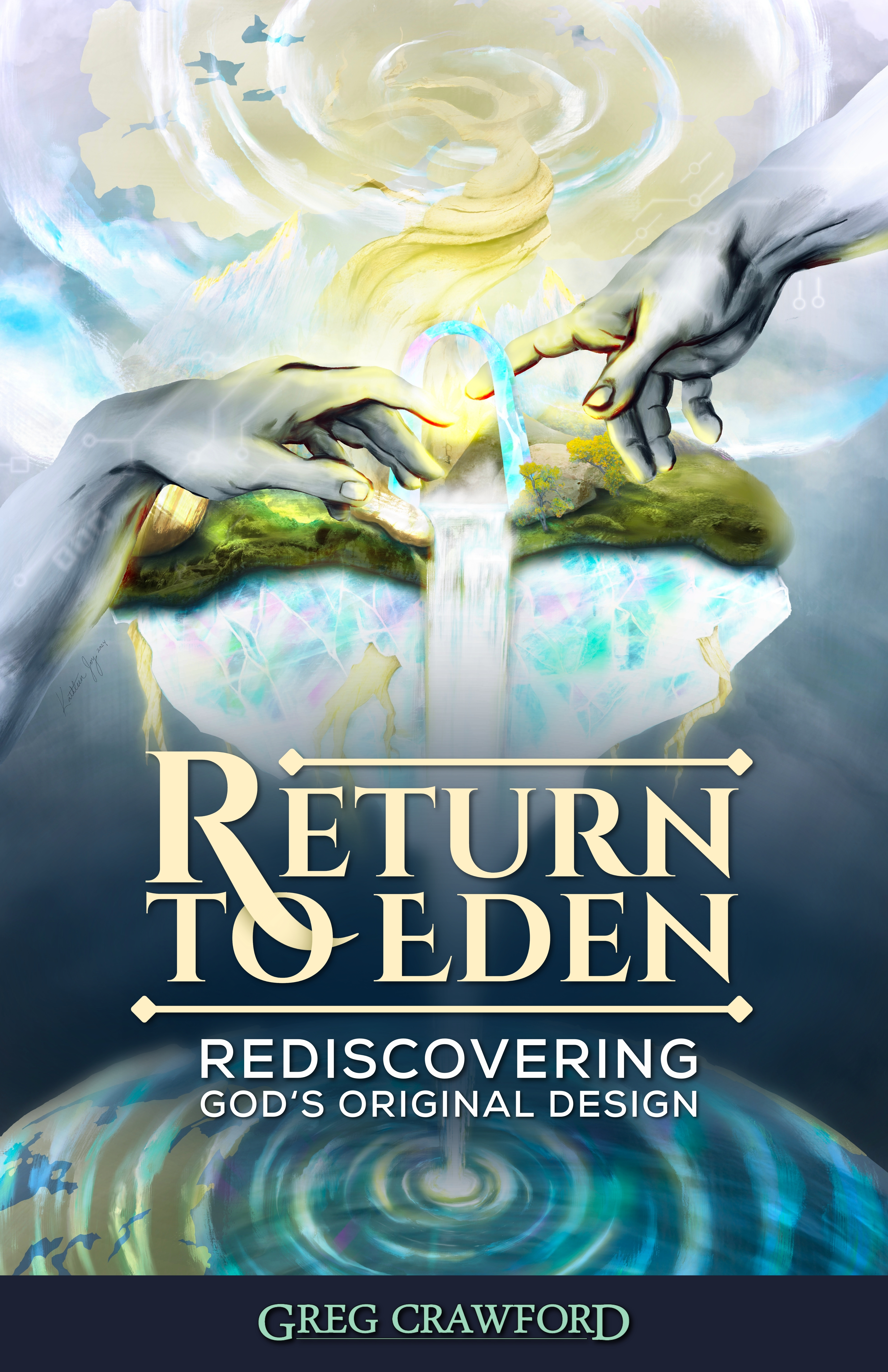
    The following is from my book “Return to Eden” available on amazon and Kindle.

    …….Both of these lights are called great. But He said one was greater light. The word great means large in magnitude and extent. But what is interesting is these lights were set to rule. Light has a rulership. The word rule means to have dominion. Now at first glance, we would assume the greater light of day would be the sun, and the lesser light would be darkness. But he also speaks of making the stars. He does not say the lesser light is void of light but is lesser. The lesser means younger, smaller, or less important. What is important is that both lights are ruling, one rules the day and one the night. Both have dominion. This began the rule or reign of light. It was set in motion that light would always rule, and the lesser light would always submit to the greater light. This is further explained in the following verse.

    Psalm 136:7–9 (KJV 1900)7 To him that made great lights: For his mercy endureth for ever: 8 The sun to rule by day: For his mercy endureth for ever: 9 The moon and stars to rule by night: For his mercy endureth for ever.

    The earth is ruled by something in Heaven and is always under its rule which is light, be it greater or lesser. This light rules all creation in the heavens. Now we all know that what is lesser is always submitted to what is greater. So, what is void of light submits to the smallest light. The smallest light is swallowed up in ever-increasing brighter light. It is progressive submission to what has the ultimate rule.

    Matthew 13:43 (KJV 1900) 43 Then shall the righteous shine forth as the sun in the kingdom of their Father. Who hath ears to hear, let him hear.

    The Garden was a place for the righteous. It was also a place to rule from. The original design was for us to “shine forth” as the sun or the greater light. That all other lights would be submitted to this light, the light of righteousness. The word shine in the original definition is made up of two words. Ek Lamp0. Ek means the origin point at which actions proceed and Lampo to give light, to radiant brilliance or to give light, something attractive and richly colorful. Again, this light is from the origins of the same light of creation shining upon Eden, the place of the righteous. This ruling light is directly connected to our righteousness and also to creation and the Garden of Eden being set aside for the righteous or for the shining lights. That light is Christ and the Father.

    We are an extension of that original light. The Bible says that light is dwelling in us and that “light” is Christ and he is the light of all men. He is the supreme light, the greater and greatest light which means all other lights have to come under His lordship. Even a sinner has a degree of light. It’s just that darkness is crowding or overshadowing the light within. When we come with greater light, the darkness has to submit to our light and the light of Christ begins to penetrate the heart of the sinner. Our light encourages and engages the light within the person and empowers them to step into greater light. Eventually, that light grows and pushes the darkness out and the person makes a conversion to allow the rule of greater light to take place.

    This transformational process is present in natural light. It’s amazing that even natural light has such power of transformation. Natural sunlight hits our bodies and takes what is dormant in us and transforms it into Vitamin D. Sunlight doesn’t carry vitamin D as we think but has the power to produce or make it. This same sunlight also can touch a plant and allow photosynthesis to occur. Taking different elements and bringing life from them. If God can transform our natural bodies and all plant life with the light he created we call the sun. He can also transform our spiritual bodies and all life around us with the SON.