The Glories Upon the Earth

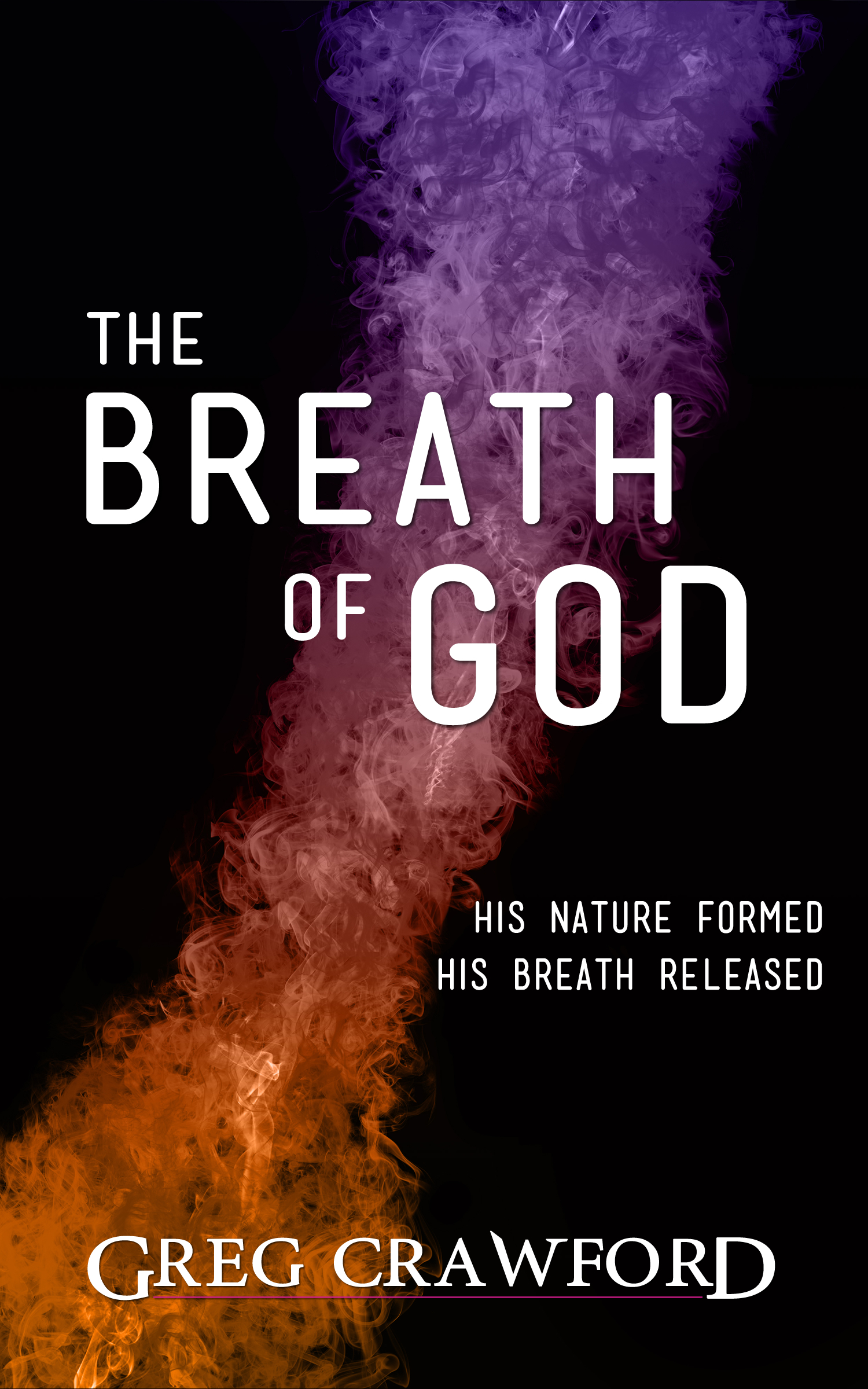
Last night my wife and me were talking about a book I wrote in 2014 called The Breath of God. Today I wanted to post a blog concerning our discussion.

The book was a divine inspiration God gave me over 30 days of being locked away with him. I wrote all 300 pages during that time. In the book the Lord showed me the book of Ezekiel and how in it is 4 distinct times the breath (Ruwach) of God came. In between these breaths there were certain glories that also were released because of the breath. Our conversation last night was about where we are at in the process.

I am amazed by this pattern that has unfolded over the last 10 years. It is very distinct and once you grab hold of the revelation it is easy to see unfolding. But like many prophetic revelations God gives there are overlaps of time and cycles. There are also people at different maturity levels and understandings. But the patterns are there and continue to unfold whether we understand them or not. Here is a very brief overview of the 4 breaths and seven glories the Lord gave me:

The first breath – First Glory – The Glory with The Captivity.

Ezek. 3:12-13, 15 “Then the Spirit (breath Rawach) took me up, and I heard behind me a voice of a great rushing, saying, Blessed be the glory of the LORD from his place. I heard also the noise of the wings of the living creatures that touched one another, and the noise of the wheels… then I came to them of the captivity.”

This is an illumination glory or an awakening glory. It is where God shines light into the hearts of men 2 Cor. 4:6. The Breath of God carried him to the place where the glory was. The frustration a watchman experiences is seeing the lack of relationship with the Lord that causes a lack of spiritual life. This is the same as the outpouring in the upper room, Acts 2:1

The second breath – Second Glory – The Glory at The Inner Gate of The Temple

Ezek. 8:3-4 “And he put forth the form of an hand, and took me by a lock of mine head; and the Spirit lifted me up between the earth and the heaven, and brought me in the visions of God to Jerusalem, to the door of the inner gate that looketh toward the north; where was the seat of the image of jealousy, which provoketh to jealousy. And,behold, the glory of the God of Israel was there.”

It is a freedom glory bringing deliverance, expressiveness, outward manifestations because of inward work. Now the breath, instead of carrying him, lifts him to the place of second heaven. It is a glory above the glory of man upon the earth. This relates to the outpouring into the streets in Acts 2:5.

The third glory – The Glory Moves to The Door of The House

Ezekiel 9:3–4 — 3 And the glory of the God of Israel was gone up from the cherub, whereupon he was, to the threshold of the house. And he called to the man clothed with linen, which had the writer’s inkhorn by his side; 4 And the Lord said unto him, Go through the midst of the city, through the midst of Jerusalem, and set a mark upon the foreheads of the men that sigh and that cry for all the abominations that be done in the midst thereof.

This is an honoring glory of His character. Honor opens doors and this is a glory of entrance. A glory that requires sanctification. This is the Acts 3 glory seen at the gate beautiful, which revealed the divine origins of God.

The Fourth Glory – The Glory Fills the Court to the point of touching the Cherubim.

Ezek. 10:4 “Then the glory of the LORD went up from the cherub, and stood over the threshold of the house; and the house was filled with the cloud, and the court was full of the brightness of the LORD’s glory.”

This is His filling glory. It requires his Presence. It is his nature being formed within us. It is an Acts 4:31 moment and focus.

Fifth Glory – The Glory Moves to The Eastern Gate

Ezek. 10:18-19 “Then the glory of the LORD departed from off the threshold of the house, and stood over the cherubim… the wheels also were beside them, and every one stood at the door of the east gate of the LORD’s house; and the glory of the God of Israel was over them above.”

This is a dividing Glory, a separation of holy from profane and an entering into the true holiness of God. It is a national purging glory. It is seen in Acts 5.

The Third Breath and Sixth Glory – The Glory Moves to The Mountain on The East

Ezekiel 11:1 (KJV 1900) — 1 Moreover the spirit lifted me up, and brought me unto the east gate of the Lord’s house, which looketh eastward: and behold at the door of the gate five and twenty men; among whom I saw Jaazaniah the son of Azur, and Pelatiah the son of Benaiah, princes of the people.

Here we have another breath and again it lifts him. This is a covenantal alignment glory. A supernatural knitting of hearts for common purposes. A oneness of John 17. The forming of one new man and a corporate expression of a corporate man no longer divided but as one. These 25 men representing the Ecclesia or government of the city. We see this in the beginning of Acts 6.

The fourth breath and 7th Glory – The Glory Fills the House he has built, and He is now in the House!

Ezekiel 43:5–7 (KJV 1900) — 5 So the Spirit took me up, and brought me into the inner court; and, behold, the glory of the Lord filled the house. 6 And I heard him speaking unto me out of the house; and the man stood by me. 7 And he said unto me, Son of man, the place of my throne, and the place of the soles of my feet, where I will dwell in the midst of the children of Israel for ever, and my holy name, shall the house of Israel no more defile, neither they, nor their kings, by their whoredom, nor by the carcasses of their kings in their high places.

Now the breath takes him. It is transparent glory or transcended glory. The corporate man is formed, and He is now dwelling in the house. We become a doorway to heaven as they peer into us, they see heaven because of our transparency. These will be outward expressions because of inward work. This is where the kingdoms of this world become the kingdoms of our God.

Now as you can see there is much to each of these. I have watched the overall themes of these 4 breaths and 7 glories played out in real life. But where are we in the process? That was the discussion we had and that is where the discussion always seems to lead in the countless groups that have done book discussions and studies on “The Breath of God.”

So, I want to help us understand exactly where we are. As I said, many are in different journeys of spiritual time and maturity. But God has a timetable as well and it continues to unfold. Some will know the times and seasons and others will experience times and seasons. Some will open and lead a season, and others will be the participants.

As I see it from the one who got the original revelation, we are waiting for the third breath to occur. It is starting to come forth because of the indicators of the Glories that follow. Many are in the fourth glory and are experiencing new degrees of filling by God. Others are moving into the fifth glory and are seeing holiness in a new light. As a nation we are in a national purging right now. Decisions are being made for righteousness or what is profane. It is indeed a dividing glory. The fifth breath is focused upon the Eastern gate. To me this is symbolic of Washington DC. As the sixth glory is focused upon the mountain in the East.

Still others are working towards a one new man and a corporate expression. They are forerunning the sixth glory. It has not yet come because there needs to be a breath of God first, but the pioneers and forerunners are already seeing the next place God is about to open.

I know this all might seem very new to you and may be hard to follow but what I tell people is you must go in the spirit to the place the revelation came from to understand it. My quick summary is this. Some are beginning the third and fourth glory. Others are in the fifth and still others are forerunners in the sixth. These are the overlaps of people in different journeys. But I know we are all waiting for the next breath to come. We all are in one of the glories that is between the second and the third breath. The third breath we desire is not yet here because God is endeavoring to do something together with the corporate man and is giving time for people to get caught up.

I hope this short teaching helps you in some way to see you are part of a grand plan of God. That our lives are connected more than we think. We are all heading to a single destination of spiritual life and may be experiencing frustrations of why the delay. I hope I brought some clarity of what God is working out in people who are at various stages. As I travel and speak, I see these different dynamics in separate groups. I can honestly say, oh God is working this in you because you are in this glory. My prayer is that you to can see this as well and hasten what God is doing in the earth.

The Lost Art of Tarrying

As I began to do an in-depth study into the early Church, I wanted to discover the ancient paths that we have lost and they obviously had found. Amazingly, I discovered a very old but seldom taken path, the art of tarrying. For some it might be contemplative prayer, for others it is silent prayer and for others, it is meditation. Some would say it is the harp and bowl model and others would call it soaking prayer. But tarrying is more than any of these types of descriptions. Most of these are primarily focused around the presence of the Lord. But tarrying has both presence and divine purpose associated with it.

Luke 24:49 (KJV 1900) — 49 And, behold, I send the promise of my Father upon you: but tarry ye in the city of Jerusalem, until ye be endued with power from on high.

Jesus commanded them to tarry until a certain aspect would occur, to be endued with power from on high. The word ‘endued’ means to be wrapped in light or to be totally enveloped. It also can mean to be mantled. The word ‘power’ is the word dunamis and means grace, but also means the nature of God himself. He told them to tarry until this wrapping of God’s character and mantle was upon them.

The definition of tarrying is to wait with anticipation and expectation, not to sit idle. Tarrying is worship, prayer, decree, studying, but all these are outward actions. Anticipation and expectation are issues of the heart. Jesus was essentially saying to them ‘go position your heart and keep it positioned until My character is mantled upon your life’!  The actions of worship, prayer, decrees, etc. help keep our heart positioned correctly but are not actually ways of tarrying. Tarrying is sitting with expectation at the feet of Christ.

In the account of the upper room, they were given this commandment to go tarry. However, earlier, Jesus had asked them to come with Him as He tarried before the Father. Mark 14:34  My soul is exceeding sorrowful unto death: tarry ye here, and watch.   He asked them after finding them sleeping, could they not watch one hour, verse 37. He modeled tarrying as He had deep conversation with the Father concerning the destiny of His life and the redemption of the world. He was in agony as He poured Himself out before heaven’s throne and received final instructions. Yet when He returned, He found them all sleeping. This is much like the Church today. In our prayer meetings, 24-hour worship and prayer, etc., we tend to go through the motions but our hearts are far from Him. We need to be awakened and that is what true tarrying will do. It awakens you to God’s purposes.

In the garden, Jesus invited them to tarry but at the upper room, He commanded it. This command was a necessary one as their hearts had proven in the garden to be far from the things of God. I believe God is again, not inviting us to this ancient path, but commanding us to come and tarry. The first invitation was for one hour. Imagine His disappointment then, but also even today, as many cannot pray for an hour even when giving God their wish list, all He wants is for us to come and sit and hear His heart.

In Acts in the upper room, they went, not knowing how long they would be in the process. We know it to be about 10 days. A quick work was being accomplished. When it was finished, the purpose of God was formed inside of them and the nature of Christ was upon them enabling them to fulfill the assignment. You see, true tarrying has nothing to do with you and your needs and everything to do with God’s plan and purposes. It is a deep cleansing process and deep gut- wrenching moments as He reveals both our inadequacies and His divine nature. It is as if we are at odds with them and all our so called “prayer requests” hold no real value of being answered compared to the glory He is revealing to us.

As we look at this time of tarrying, we see Peter arising and preaching the first message after being endued with power. It is roughly ten to fifteen minutes in length by what we see written and 3,000 converts were made. How many of us would be willing to tarry for 10 days, speak 10 minutes with such power from His nature, and see 3,000 added? Within 24 hours of the answer, there were 3,000 converts. We have lost the ancient path of tarrying before the Lord!

Most of our messages are powerless and hold no real revelation. They do not prick men’s hearts and shift culture. We spend time in study and prayer but we must spend time in tarrying. Tarrying forms His nature within us, which empowers us. Tarrying enables our plans and message to be discarded and His picked up. Tarrying allows us to not just preach with enticing words, but to preach with power and signs and wonders.

When Jesus slipped away to pray to the Father, He modeled tarrying more than any other things. He was having a dialogue with the Father and conveying His heart as He received the Father’s heart. He then came forth out of these times and moved in great power.  

Acts 1:7–8 (KJV 1900) — 7 And he said unto them, It is not for you to know the times or the seasons, which the Father hath put in his own power. 8 But ye shall receive power, after that the Holy Ghost is come upon you: and ye shall be witnesses unto me both in Jerusalem, and in all Judaea, and in Samaria, and unto the uttermost part of the earth.

These verses in Acts say again, what will happen in the tarrying.

Times in the Greek is chronos meaning ‘measurable time, like minutes, hours, days’

Seasons in the Greek is kairos meaning ‘divine moments in God He has ordained’

(Own) Power in the Greek is exousia, which means ‘authority or the legal right’

(Receive) Power in the Greek is dunamis, which is ‘the origin of the very nature residing’

As we look at this, we can see that tarrying is going to produce something that is more important than even knowing times and seasons or even the legal rights because it will produce the living nature of Christ within us. Tarrying conforms our nature to His nature thus enabling us to move in the full power of the Holy Spirit.

We have often pondered on what they did as they gathered for all those days. Did they reflect on scriptures? I believe they did, trying to find answers and explanations to what this power would be. We see Peter speaking from the book of Joel as a fresh revelation, which was possibly a recent place he had just read. Did they sing and worship? Probably, as they were excited to be counted worthy of this new dimension creating questions none of them could answer. Did they pray? I’m sure of it. They needed answers and I’m sure they were full of questions. Did they discuss Jesus’ words? Absolutely! His words were why they gathered. They probably had in-depth conversations about them and the possible meaning. The one thing we know happened is that they created an atmosphere to draw the Holy Spirit and created one accord. The act of tarrying has all these elements in it, not in the mechanical processes we tend to do, but in a living, life- giving and flowing purpose. The tarrying was for a reason, not just because it was something needing to be done. It was a container built by human spirits hungry for God.

You see, their approach was not seeking results; this is called ‘search theology’, which is constantly looking for results to validate God. They knew there would be results. He had promised and commanded and spoke with authority that this would come to pass. They had a ‘harvest theology’, which means they understood the promise’s ultimate result would occur. Their seeking and the difference in tarrying over simply praying is; praying is searching while tarrying is knowing. Instead of them searching God, they were allowing God to search them. They were in a quickened process of obstacles being removed from their lives so they would not block the intentions of God. Now that’s real tarrying! They were at a critical moment of time, the second time the word ‘tarrying’ was asked of them. Let us go back to the garden and look at that time again to help us see the importance of tarrying.

Matthew 26:38 (KJV 1900) — 38 Then saith he unto them, My soul is exceeding sorrowful, even unto death: tarry ye here, and watch with me.

Tarry means “to continue”, “tarry”, “endure”, and translated miscellaneously five times. 1 to remain, abide. 1a in reference to place. 1a1 to sojourn, tarry. 1a2 not to depart. 1a2a to continue to be present. 1a2b to be held, kept, continually. 1b in reference to time. 1b1[1] to continue to be, not to perish, to last, endure. 1b1a of persons, to survive, live. 1c in reference to state or condition. 1c1 to remain as one, not to become another or different. 2 to wait for, await one.

They had not become one yet. They definitely were not of one heart and soul and they still were not one with Christ. Jesus saw the lack in the human nature to understand spiritual things and the process needed to create that oneness. Imagine His disappointment as He came and saw them sleeping.

Matthew 26:40 (KJV 1900) — 40 And he cometh unto the disciples, and findeth them asleep, and saith unto Peter, What, could ye not watch with me one hour?

Here He is at the most critical part of His assignment upon the earth and He desires to share this moment with those closest to Him. Yet they are sound asleep. As I said earlier, this is the state of the Church and few in this hour are awakened. Even among those already awakened, few are tarrying and we wonder why things are not exploding. We are again at the most crucial moment in the life of Christ in the Church upon the earth. We are at a real point of death to self unlike anything we have ever seen before. Dying to self has become so cliché and has no meaning unless combined with tarrying before the Lord to receive His instructions. However, for those who do tarry like Christ did with His Father, there will be loosed a resurrection power that will far exceed anything we have seen and done. Our later years will be greater than our former and we will do greater works!

Luke 24:29–30 (KJV 1900) — 29 But they constrained him, saying, Abide with us: for it is toward evening, and the day is far spent. And he went in to tarry with them. 30 And it came to pass, as he sat at meat with them, he took bread, and blessed it, and brake, and gave to them. 31 And their eyes were opened, and they knew him; and he vanished out of their sight.

Another time the word ‘tarry’ is used is after the Resurrection and Jesus is on the road to Emmaus and meets two followers. They asked Him to abide but Luke wrote that He tarried with them. He did not spend much time yet suddenly their eyes were opened. You see the actions of Jesus tarrying created awakening. His tarrying had corresponding actions.

We see another time that Jesus left the normal actions of life and tarried at a well. (John 4) The other disciples went to get food but as Jesus told them later in John 4:34 My meat is to do the will of him that sent me, and to finish his work”.  His tarrying at the well was intentional and had a specific result; it confronted a woman’s heart and brought healing with the overall results being the conversion of multitudes of Samaritans.

As we begin to look further, we see times that Apostle Paul tarried as well. He specifically states that his tarrying would produce a certain result.

1 Timothy 3:14–15 (KJV 1900) — 14 These things write I unto thee, hoping to come unto thee shortly: 15 But if I tarry long, that thou mayest know how thou oughtest to behave thyself in the house of God, which is the church of the living God, the pillar and ground of the truth.

Paul tarried so the reverence he had would come upon others. He believed his tarrying would be a living example for others to follow. We might interpret this as his length of stay, but I see it as his length of time spent before God. After all, he could stay for a long length of time but if they did not see His actions before God, they would not have reverence. It was a specific type of tarrying that Paul did and he invited others into it to experience it.

We know Jacob wrestled all night for God’s blessing. In my opinion, he was tarrying before the Lord. He did not know how the blessing would come or what it would look like but he did know not to give up. The scripture says he wrestled but the wrestling was probably more with himself and his responses before God. His act of both wrestling and tarrying allowed him to walk away marked by God for the rest of his life, a reminder of a turning point in his life.

Daniel also tarried and fasted for 21 days to get an answer. Interestingly, his words were heard from the first day, but his tarrying was enabling the spiritual realm to be cleared so his answer could come. It appears tarrying faith can both put into motion and hold in motion the angelic host until the answer is brought forth upon the earth. Perhaps much of our spiritual warfare is not effective because we don’t really tarry in faith. Maybe it also has to do with our lack of fasting, another ancient path that has been lost or at least greatly diminished.

Like all things, ancient paths require the right heart attitudes and motives to be effective. If our heart condemns us not, then we have confidence before God. If we are feeling condemned or are walking in sin, rebellion, or lack a desire to live a fully committed lifestyle of true faith, our confidence will reflect this. Confidence does not just come for us to feel good about ourselves but it comes to empower the desire to abide in God … to pursue His presence, to tarry until He comes.

However, what else keeps us from tarrying before God? A prayer less life. Prayerlessness keeps us from tarrying because we might be confronted about areas of our life in need of change. God wants to deal with your heart BEFORE you tarry with Him. Notice I said with Him. Tarrying is about a discussion of partnership of God’s intentions into the earth. Prayer tends to be a more one-sided discussion as we make requests of God. Tarrying is God making requests of us! God wants to shift things in our personal lives and before tarrying can truly be effective, things must be confronted with prayer and worked through in our own walk with Him. Tarrying is for the corporate Body as prayer is for the individual. God does not want our times of tarrying to deal with our personal sin issues but the sin issues of a region, people group or nation.

When we tarry before God, we are also tarrying before His holiness. We are seeing the beauty of holiness of which David so beautifully described. We are at a place of awe and reverence. If our heart is right, then tarrying shifts our position from entering into His holiness to tarrying in His holiness. We stay sustained in this place as a supernatural exchange occurs. We receive more of His nature and our nature fades. We understand His ways and paths because they are holy. We see the ravages of sin upon humanity and God’s overall love and plan. We are truly coming under His Lordship to be a tool empowered to make change. The actual degree of Lordship we see exercised today is directly related, I believe, to the amount of time spent before the Lord simply tarrying. When Lordship is lacking, a deep relationship is not in place. As you study the scriptures, the overall plan of salvation has little to do with the actual act of forgiveness and more about Lordship and the walking out of forgiveness under Lordship. I am not demeaning the work of the cross but simply stating it is the invitation and not the final destination of our walk with God!

Tarrying is not about spending time to find or receive a blessing. God may or may not reveal that portion to us. Tarrying is about a transformation process. It is about a journey with Him. If you are struggling in tarrying and it is hard for you to simple sit for a length of time of say, two hours, then possibly you are still coming to the Lord with a blessing mentality. You will know you have made the true transition into fully tarrying when it becomes a joy instead of an obligation. When it becomes an expectation. The reality is, the ones who can tarry a long time have found a real secret ancient path. That is the tarrying is the blessing! This is the joy of being with Him, not asking anything of Him but His dialogue! Now that is joy unspeakable and full of Glory and the half has not been told!

Micah 7:7 (KJV 1900) — 7 Therefore I will look unto the Lord; I will wait for the God of my salvation: My God will hear me.

What we are tarrying for can be summed up in this “that a portion of His holiness would rest upon us.”

  1. Tarrying before God will enable us to be kept by the power of God.
  2. Tarrying transforms our nature.
  3. Tarrying before God will release hidden mysteries.
  4. Tarrying before God will cause clarity to come concerning spiritual truth.
  5. Tarrying can become a lifestyle and not an event.


Thought Life & And Paul’s Resurrection

2 Corinthians 10:3–6 — 3 For though we walk in the flesh, we do not war after the flesh: 4 (For the weapons of our warfare are not carnal, but mighty through God to the pulling down of strong holds;) 5 Casting down imaginations, and every high thing that exalteth itself against the knowledge of God, and bringing into captivity every thought to the obedience of Christ; 6 And having in a readiness to revenge all disobedience, when your obedience is fulfilled.

Philippians 4:8 – Finally, brethren, whatsoever things are true, whatsoever things are honest, whatsoever things are just, whatsoever things are pure, whatsoever things are lovely, whatsoever things are of good report; if there be any virtue, and if there be any praise, think on these things.

Isaiah 26:3 – Thou wilt keep him in perfect peace, whose mind is stayed on thee: because he trusteth in thee.

In the past few weeks many people have been in their thoughts and head space. When you’re in headspace you’re not in faith. The kingdom and its principles only work by faith not by emotional health or intellectual thought process. When our thoughts or emotions dominate then the kingdom becomes dormant. If the kingdom is dormant or asleep then spiritual awakening is not present.

Our thoughts create the world we decide to live in. Our thoughts are so powerful they can make us believe things that are not true, and even distract us from the truth. Our thoughts can even create things that hold greater value to us than what God is creating. This wrong thinking causes our faith to activate to form what is temporal and even leads us to not be committed to Gods truth.

I want to turn to the account of Paul’s life in Acts 14. Paul and Barnabas come to Iconium and have opposition. This opposition is coming from unbelieving Jews who are stirring up gentiles. Look at what the verse says:

Acts 14:2 — 2 But the unbelieving Jews stirred up the Gentiles, and made their minds evil affected against the brethren.

They made their minds evil. What caused this was because they were unbelieving. The word unbelieving means to be unwilling to be persuaded or to withhold belief and to withhold obedience. All of these are intentional decisions to do the opposite of what they knew to do. They were in rebellion that was coming directly from their thought life. The outcome was the Gentiles minds were made evil. The word evil means to do evil, to ill-treat, to embitter, to exasperate. It was so bad they turned on the brethren. The outcome of the offense was a divided city V.4

Acts 14:3 — 3 Long time therefore abode they speaking boldly in the Lord, which gave testimony unto the word of his grace, and granted signs and wonders to be done by their hands.

But Paul continued in the midst of division birthing, to continue in his assignment. Eventually the division formed pitting some with religious people —- some with the Apostolic kingdom group. It was so bad they wanted to stone Paul, which means execute him. So, Paul goes to Derbe and Lystra only a day’s journey on foot. Lystra is where Paul will choose Timothy for the mission (Acts 16) and it is here he first meets him.

At Lystra Paul continues preaching and heals a crippled man. This time instead of praying and seeing healing he activates the man’s faith to stand. He has figured how to go beyond the minds and thoughts he just experienced, and to see faith supersede it.

Image the thoughts going through Paul’s mind concerning all he is experiencing and seeing. Most people would draw back but Paul pressed forward. Not only is Paul fighting his own thinking he is also fighting people’s unbelief and a group of people wanting to kill him. But he is also fighting sickness in his own body as he touches on this in Galatians 4:13 as he speaks of first preaching to them having much infirmity!

The crowd calls them gods specifically Jupiter and Mercurius which they worshipped because of what they saw. The miracle was so great they wanted to offer the sacrifice of an oxen instead of just small animals. But here came the group from Antioch seeking to kill Paul and kill people’s faith. This group followed Paul for a season.

Acts 14:19–27 — 19 And there came thither certain Jews from Antioch and Iconium, who persuaded the people, and, having stoned Paul, drew him out of the city, supposing he had been dead.

Stoning was for blasphemy, among other things. It was not seen as a punishment by hitting someone with a few stones but was a form of execution. The person stoned would be checked for 3-5 minutes to be sure they were not breathing. Then the person was drugged outside the city to rot. Paul states in 2 Cor. 11:25 he was stoned and in verse 23 he was “in deaths often.” Paul could be stating he died and was resurrected many times.

20 Howbeit, as the disciples stood round about him, he rose up and came into the city: and the next day he departed with Barnabas to Derbe.

The disciples at this time were Eunice, Barnabus and a young emerging son called Timothy who was 15 years old. From this moment of resurrection Paul then writes later:

Philippians 3:10 — 10 That I may know him, and the power of his resurrection, and the fellowship of his sufferings, being made conformable unto his death.

The word conformable means to take on the same form or likeness, to come to be like him in his death. Paul after such an experience returns to the city and continues to preach and tells the disciples Through much tribulation enter into the kingdom of God.”

We in the west do not want to enter tribulation to see the kingdom come. Tribulation means trouble, affliction, anguish. It means to be pressed up hard like grapes to get wine. But the outcome was that Paul established the church in that region. He ordained city elders. Paul also now had a working model of the church to be formed all over the globe coming out of the Acts 15 Apostolic counsel meeting.

The deepest places of the power of resurrection is where the deepest tribulations occur. Looking back at how the thoughts of others could have stopped Paul. Paul’s own thoughts and infirmity could have stopped him. Anywhere along the way it would have been easy to quit and be justified in doing it. Yet without this confrontation of others thoughts and influences, the model of ecclesia God desired would not have the right foundations.

Today let us not draw back when other people’s thinking opposes our kingdom assignments. Let us not allow opinions to dictate. Nor let our own thoughts of inadequacies or sufferings talk us out of our assignment. If you suffer because of your own poor choices is one thing, but to suffer for righteousness’ sake releases the power of resurrection.

Doubt and Unbelief

Today I was in a restaurant having breakfast with some dear friends before I took off to the airport. I spoke about doubt and unbelief. As I was thinking on this later, I decided it would make a really good post.

The bible tells us to not have doubt and unbelief. But what is doubt and what is unbelief? For some they assume they are one in the same. But they are two different areas that have two different outcomes in our life. If we are not to have doubt and unbelief, then we must have the opposites which are understanding and believing.

We all have times of doubt and unbelief in our lives. One of scriptures that always has stood out to me is in Romans 4 were it talks of Abraham. It says when he became fully persuaded, he believed the promise of God not doubting. Which means there was a time he wasn’t fully persuaded and had to go through a process to shift out of doubt. Being persuaded occurs in both the areas of doubt and unbelief. One deals with how we think of applying promise and the other of activation of the promise and the outcome if it. ,

Many people can have great faith but still have doubts if things will come to pass as promised. Others have deep assurance of promise, but their faith is lacking and hope the promise will come. If we are honest with ourselves, we all have been on both sides of this having doubt and great faith,  and also times having no doubt but lacking in faith.

When we think of doubt we are dealing with assumed facts in the mind and how we perceive those facts working out. Facts are only conclusions based on inputs. We may or may not have all the inputs because facts are the best educated guess. When we think of unbelief, we are thinking of truths not fully developed. Truths of God that are sovereign and even can be spiritual law’s and promises. I see these truths as non-negotiables. This means doubt cannot and should not negotiate the outcome truth is trying to bring.

We see Abraham became fully persuaded, meaning the facts he was faced with, which are stated as the deadness of both his and Sarahs bodies, had to give way to the truth promised by God. God wasn’t moved by the facts and could even create new facts to dismiss doubt, hence their bodies were regenerated into the ability to bring forth a child of promise. But this was created by faith. It came down to what was going to rule and how Abraham would submit. He had to bring the final doubts under his spirit believing what God said was true. When this occurred, he was fully persuaded. It’s amazing of the power both the mind and the spirit have to create or deny. 

Doubt occurs in your mind while unbelief occurs in your spirit. Doubt comes by your thoughts and the imaginations of your mind. It is how you perceive things and what you do with random thoughts. It is what you assume and what you fear. Doubt has a foothold in what we think on consider and ponder.

Doubt comes to diminish hope and even to dismantle hope. It comes to put hope aside. If hope is removed, then faith has nothing to create the evidence of things hoped for. You see doubt is as powerful as faith but has the opposite result. While doubt occurs in the mind, unbelief occurs in your spirit. Unbelief is not believing or engaging in spiritual truths that governor all things. Unbelief stops your faith working as well. It does this by not fully embracing truth by faith. Unbelief working hand in hand with doubt diminishes the possibilities of God and causes us to contemplate instead of engaging.

This is why Apostle Paul tells us to be careful what we hear. He also said to take every though captive to the obedience of Christ. Casting down imaginations and everything that exalts itself against the knowledge of God. The knowledge of God is found in the truth of God. The imaginations are found in our mind. The real stronghold we are fighting is in our thought life. Whatever we allow to dominate will also create our reality. We can have facts, or we can have truths. We can have information, or we can experience life. We can have intellectual ascent or spirit ascent.

I hope this short teaching will provoke you to take a look at the possibility of your own areas of doubt and unbelief and turn them around to be assurance and full faith believing. Like Abraham its time we become fully persuaded of some things in our own lives.

Hubs, Centers, Prayer Centers, Revival Centers

This morning, I woke up and the Lord told me to write about kingdom centers, hubs, revival hubs, prayer hubs etc. I have written on this many times and even have a book on it many use as a handbook. All of these are titles for expressions of ministries outside of a typical church setting. Churches are places of nurturing for life. These centers are more for the advancement of Kingdom causes. Most offer more than a church can offer as well. In the 1970’s these were called parachurch ministries, meaning they stood alongside churches and did what churches refused to do, but more like what they couldn’t do or did not have the capability to do.

I started ministry with a church expression. That really was all there was in the 1990’s. If you were called to fulltime ministry, then you went this path. But after seeing the conflict in my people and coming to my own realization of my true call of apostle, I resigned from the church I started and told the people we were going to become an Apostolic Kingdom Center. Our current center has stood the test of time, first as a regional center in a corner of our state and now with a state wide call in the center of the state at the capital.

We started out as a center in 1995. At that time there was no center in my state of Iowa and few in the United States. I was persecuted by people, churches distanced themselves, people thought we were starting a spin off cult. I paid a high price to work through what I knew God wanted to do. But there were people who came. We started a accredited school, traveled our state doing meetings and helped places and people who had struggled with real answers. We invested into many cities and towns. We helped with church splits, churches dissolving and a host of issues. At the same time we were pressing for an awakening to come forth. But many rejected the apostolic and the center we had established.

I began traveling the United States speaking at conferences and finding others with this same heart. Over the years this has led me helping probably no less that 30-40 people start centers and give words to what they had in their heart. Some started Bbile schools as well for training. We helped with that as well, having an accredited school at one time. Today as I travel and speak I literally spend time talking to someone at every conference desiring to start a center or hub for their region. Some contact me later to discuss things in detail. This is the history I have to speak to the following.

So here is a description of Kingdom Centers, Hubs, Revival Hubs, Prayer Hubs or whatever title might be used. I’ll just call them Hubs since this is the current word being thrown around.  Hubs first should have a large vision that encompasses all the other visions of those attending. Unlike a church you go to serve the vision of the church, a hub has a vison for the person who attend. The vision of the hub is large enough to encompass all the other visions people carry into the hub. Hubs are looking to see how to release the hidden potential in a person. Some offer opportunities that cannot be found in a local church.

Centers all carry certain dynamics. These are just a few.

  1. Deep kingdom teaching with generally a set teacher or a series of teachers. This comes many times by a school of ministry being formed from the teaching grace. Some have leadership training. Life skills and worship team development. Others may be focused on a specific area of culture. But all have teaching, and it is not just regular teaching of foundations. It is a kingdom focused revelatory teaching. This sets the hub as the standard.
  2. Solid doctrine. Teaching is paramount but solid doctrine is more. Of all the things the early church fathers were concerned about was solid doctrine. The second generation of apostles were constantly fighting for authenticity. By the third-generation men were drawing people to themselves by words that sounded good but had mixture. You will find no mixture in a Hub. There is great focus upon a solidness in what is taught as it will be reproduced over and over.
  3. Activation. If you are teaching, then you also need activation into what has been taught. This is making things have a certain reality that moves from concepts to practical application. Hubs look at each person as having  a place to be productive. There are not consumers but investors.
  4. Opportunity. To activate there must be opportunity. With opportunity comes privilege. A hub creates opportunities of activation and responsibility. This generally comes through the activation of the dreams of the people. Their vision gets empowered, and the hub begins to branch outward in ministry.
  5. Empowerment is by seeing the value in each person and who they can become. It is having a vision for them as an individual and also in a corporate body. It is believing in the person and knowing them.
  6. Grace Dynamics. This is seen as all five graces of Ephesians 4 are seen to some degree or another. This mix causes a balanced approach and forms a true kingdom community of believers whose hearts are knit in love and concern. These graces are the catalyst to a creative atmosphere as well.

These are just a few of the ways Hubs operate. But most churches see them as competitive to their own vision, culture and community. Hubs are formed to bring and do what most churches may not have capacity for. Churches have boundaries to protect their culture. Hubs have boundaries to protect doctrine and truths. Some churches act like Hubs and probably will develop into them. I have helped many make this transition, to help them realize the struggles that come. Many times, you lose people due to the standard being raised. Commitment to a Hub and possibly a church also occurs. People become conflicted. Money is indeed another problem as most give to an institution than a Hub. Most Hubs fail due to lack of finances.

Many times, people who attend Hubs have no real church home and become the core group of a center. This will help with some of the problems and may create others. Why did they not fit in a local church. Are there areas in their life needing to be addressed? Possibly. Sometimes they come thinking it is a place they will shine or stand out.

Hubs each seem to have a specific assignment, and many have personal preferences of styles of worship, certain causes people rally around and maybe even a prayer focus. I don’t look at these as hubs because the vision is too singular and not all inclusive. Hubs are aware of all cultural issues and are looking at ways to shift or affect the culture. They are not looking for easing the problem but finding the root issues and addressing them. They encompass all the concerns and causes but hold them balance. The word and kingdom are foremost focus with Christ as the one orchestrating.

Many look at the church in Antioch as a model of a center or hub. But the real Kingdom center was Ephesus. Antioch was a culture crossroads and was filled with idolatry. It was actually a demonic center. Paul taught there and established a solid group of kingdom people. But Ephesus influenced Rome with its idolatry. Ephesus was also a place of cultural influence but was a crossroads to the rest of the known world. From Ephesus Paul would branch out and spread the kingdom.

Hubs should have an apostle overseeing them. All should be apostolic but that does not mean that an apostle is resident. It means they have come under an apostles grace a set apostle carries. That is key because apostles have been given authority to them within regions, territories states and even nations. They carry a certain grace pertaining to their assignment. Regions have graces to draw on that hold the answers people and leaders need. To deny this grace is to deny Christ set order.  Myself I know I carry certain graces, one being an advancing grace. I also carry an atmosphere shifting grace. This grace brings the Spirit of Understanding as well. These are just a few. These dynamics are what cause expansions for those who engage and embrace it. If people don’t the grace is still present, just inactive or not to fullness.

Hubs are started not by a need for them, nor are they started because of being offended at churches. They are not started because of opportunity, nor because you cannot find a place to minister. They are God ordained and spiritually confirmed by other leaders. Most require the apostles active grace to even begin properly on solid doctrinal foundations. Of the dozens and dozens of hubs and centers I have seen and helped the ones who made it were truly ordained by God. The others seemed to fade away over time. It takes a pioneering spirit, a building anointing, a prophetic visionary type person. It requires great faith as well. Hubs and centers become great places of resources to a region, especially in spiritual activity, equipping and teaching. They extend these activities into other regions as well.

What I have experienced is many times church leaders don’t want to embrace what hubs and centers have to offer. It can reveal lack in their own ministries and the fear of losing people seems to keep them at a distance. Yet what centers and hubs offer is a great resource to make the role of pastor easier because people have been matured. Centers and hubs maintain high standards and are places of doctrinal security. Especially if they have a ministry school, they realize what is taught will be reproduced over and over. They don’t want more error being taught so doctrinal standards are maintained. If centers and hubs were embraced, the whole Body of Christ will be better off. It becomes the training ground for future leaders.

Vision of the “Canes” 8/15/24

The Lord took me in a vision of people standing in a room with walking canes. There were hundreds of people with canes and even thousands. Some had their canes raised in the air like “Here I am Lord” while others were using them to stand as they needed them. In the vision a great healing wind came into the room and people were healed of all manner of physical things, things that was the reason for them to have the cane. As they were healed, they either simply dropped the cane or threw it in the air. The bulk simply dropped the cane. I said to the Lord this is great. A healing wind has finally come. I felt the vision was over, but it wasn’t.   

Then the Lord took me into what seemed like a large room that was a large field covering thousands of acres. It was the room of the United States church. It held millions of people. He showed me the people standing with canes, but these were different than the first group. He said “they have much propping them up. Look what is helping them to stand.” I looked and saw many with canes again. Some were leaning on them and some sitting on them. But then I saw words written on each cane. Pride. Self-righteousness. Intellect. Rejection. Anxiety. Open believe. Almost any word you could think of was written. Some words that were good like humility, or goodness, etc. as well. I asked the Lord what about these words they seem out of place to prop someone up. He responded, “these are taken to extremes as well and have become out of balance. I could easily kick these canes, and they would no longer be propped up. But then the person would fall.”

I could easily see the masses that had things out of balance. Places of attaining and then no forward growth. Things that caused them to think they had arrived, so they settled there. I sensed a realigning with being held up by Christ alone and not all the things he brings us. I sensed a move of the spirit coming that would bring a plumb bob again. It would measure if you were standing upright or are propped up and leaning on your cane. God was going to correct this with a refocus. I could see a deep repentance coming, a deep metanoia that would occur. I saw many drop their canes once they realized they had not been given the full counsel of God. But I also saw others who hung to them. A move of God was emerging after the letting go to sweep the nation.

Then the Lord took me to another room. It too was a large field but not like the field or room of the church. It was behind the stage of the room of the earth. In this room I saw leaders of ministries again. This was the leaders’ room, it represented both leaders and ministries. I saw again the canes propping people and ministries up. This time different things were written on each cane. These were different than the church canes. These had multiple writings. Some were the same as the church room and I knew they had reproduced some of the people’s canes the church room had. But they also had things such as fame, importance, money, wealth, notoriety, prestige, accomplishment, and a long list of names leaders strive for, all very different than the church room canes.  

The Lord said to me, “Unlike the church canes, in this room I will kick the cane out from under them. They will fall and you will see in this hour what happens when what was propping them up has been removed. They fall so far you no longer see them.” I saw thousands of leaders and ministries propped up. I saw a few the Lord kick the cane, and they fell as if to disappear in the floor of the room. You never even saw them as if they disappeared. I saw the ones I knew in the last months who had fallen. I saw the names they leaned on. I saw others who were propped up or sitting on their canes. They were looking to see if the name on the cane that was kicked out was on their cane. If it wasn’t they felt, they were ok. But as far as God saw all were the same no matter the name. It was the fact they had allowed something to prop them up. I felt God really doesn’t need these who are leaning on the canes. What He will do, does not depend on their response. The contentment of this group to stay propped up was higher than the previous 2 groups. The first group seemed more desperate and serious. The second group was settled but not pursuing.

Then the Lord recapped it all to me. I saw the Lord was gracious to those in need in the first group. They had genuine need and were pursuing. It seemed they had found a cane that had no name on it. They saw it as temporary until the wind blew. They knew the wind was coming.  I saw those in the second group, the church group, had received a cane that was never addressed by a leader. It was as if not addressing issues created the cane. The ones who dropped their cane and got free were surprised when the wind blew. But to the leaders who knew better they had been given a chance of repentance. It was a high level of accountability. Many wanted the wind to blow because it was right but did not pursue removing the hinderances that were stopping it. Then the vision ended.

Afterwards I contemplated how easy it is to be propped up once success comes. Or even if you plateau to get accustomed to what is and never reach maturity. May God bring us understanding of what each of us must do. May God have mercy upon His Church and its leaders.

Why Revival Isn’t Enough: The Power of Awakening in The Faith

Today we see three words being used at times almost interchangeable. Awakening, revival and reformation. Lately reformation seems to not be as dominant as it once was. All three are very different in both outcomes and what we are talking about. We really need to understand our terminology better. Perhaps it’s due to the loss of our vocabulary over time. At the time of Shakespeare, the vocabulary used daily was 54,000 words. Todays modern culture it is reduced to 3,000 words. Because of this we lump words together to have a similar meaning.

The terminology we use causes us to not be on the same page as well. A revival many times has a great stirring of emotions to stir up the loss of passion for the Lord. Really it is saying we have lost our first love. Many revivals also have a heightened time of the gifts of the spirit moving as well. But these should be normal Christian life. When we look historically, we see locations where past revivals occurred are historically actually worse 100 years later than at the time before the revival. This is due to the fact of outward influences that caused the revival have been removed. So, there isn’t anything to build upon. Revival means to return to a former state of being or to revive such as to raise from the dead.  That is a sad state of affairs to say we need a revival. It means we have lost the life we once had and need to return to it. We should never get ourselves into such a place.

Awakening is an internal moment an individual has that forever changes them. It means to get out of sleep, or to come alive to a new understanding. It affects how we see God in life and affects our perspectives, what we put effort and energy into and affects the people around us. If enough people experience awakening, we call it a great or mega awakening meaning enough individual people being awakened during a set time has reached a mass affect upon culture. This is when bars are closed, and people’s lifestyles are changed for the better. It becomes a cultural shift. Many of the past revivals were awakenings that occurred. These caused cultural reformation and realignment. Revival generally touches a smaller group, while great awakening touches the masses. Awakening being internal has a lasting effect and carries a foundation to build upon.

Do we see patterns of revival or awakening in scripture? We really don’t see revival. What we do see is an ongoing awakening. Even when things seemed stagnated or at a pause, another moment of seeking God produced a new insight in what to do, an awakening to a new dimension of faith unfolded.  The church actually moved from one awakening to the next progressively. New revealing of truth happened and new experiences because of that revealing unfolded. It was going from glory to glory. This happens every time we read the word of God, and something is highlighted to us by the Holy spirit. We are awakened to another dimension of God we never knew. We constantly experience awakening on a daily or weekly basis.

The early apostles were very adamant to maintain authenticity to the original awakening truths. We see this in Acts 4 where they continued steadfast in the apostle’s doctrine. There are several written works concerning these truths and maintaining them. Polycarp, who was a disciple of Apostle John was one who tried to maintain what was most important that John and told him. He was eventually burned alive, and the flames did not consume him, so they drove a stake through his heart. Ignatius was another disciple of John who also maintained the integrity of the original truths. Both of these men made sure the apostle’s doctrine was documented correctly. Even in this second-generation of apostle’s people were already beginning to shift the scriptural understanding. By the third generation a battle with men’s influences was beginning, trying to bring men’s opinions into true spiritual faith and taint it. These times of sightly drifting from truth had an effect. It began a realization over time of missing something that had once been. This was the beginning of the modern-day revival mindset we have today. In all honestly it seems what we do as revivals today is actually “living faith outside the walls” more than finding what was lost. Revivals as we now know is really a new thing started in the 1700’s. They believed men had lost faith in God and focus on God was lacking terribly. They held meetings specific for people to either renew faith or experience it for the first time. Really it was more of an awakening than a revival.

When it comes to revival or awakening, I am more concerned about the fruit that is being produced. I am looking at 2 things in this. One does the outcome last and can I taste Christ within it. Second does it have the seeds to reproduced Christ, so he is multiplied. Does it have the longevity and legacy the early fathers were looking for in people’s lives? These things are kingdom minded and advancing.

 Am I against revivals? I see it as something we should say we will work towards to not being needed. Our mindset should be that it is revealing something more detrimental than a fix to our current situation. Should our focus be on the church? Yes, to make sure it is in constant awakening. This requires an ongoing kingdom revelation to be allowed to flow. We must challenge people to pursue growth and their own disciplines.  Do I think we need to change our terminology? Absolutely.  We will, once we see ourselves different because we see constant awakening occurring in our own lives.

Defining Biblical Church

Today we have many different concepts of church. We have the biblical definition of the ecclesia. We then have differing opinions of the original Greek word. We then have denominationalism and the 45,000 flavors and branches and splintering’s. Yes, you read right 45,000. Then we have the moral mixture of LGBT etc. We then have the different tags of seeker friendly, hyper grace, Pentecostal, Charismatic, Kingdom, Apostolic etc. As we look at each of these how do we really know if it is a church by Gods standards. After all that is what really counts.

In each of these can be found a measure of truth. Some are closer to full truth than others. Some have mixed truth with personal preferences. Others have a mixture of truth and man-made doctrines. Still others just have manmade structures. An unbeliever is becoming increasingly confused about what to believe as we keep allowing cultural influences to define what we believe. We are close to going over the edge of just having an open believe system.

Part of this is due to no apostolic bible-based accountability. Another part is secondhand truth due to a busy society that demands more time than we have, so our pursuit of studying Gods truths is secondary. It also is due to so many translations of the bible which have moved from word to word to thought to thought to paraphrased and finally opinion.

So, I want to endeavor to give you what the Holy Spirit said to me on this. I have tried to define the church we see or should see many times. I see the unbalance and not conformity of one new man in the body of Christ as well. I start the journey looking at the original intentions of God in the church birthed at Pentecost. The first church everyone was truly born again, truly water baptized and received the mind of Christ, truly was filled with the spirit. This way they saw the kingdom John 3.3 and entered the kingdom John 3.5. These three things were foundational and authentic. They also brought union with Christ and formed one body around the understanding of these truths and the experiences these truths brought. No one in the early church had a belief of not being spirit filled.

Just because the name church is on the name and the IRS papers are filed does not automatically make something Bible based. It does make them recognized as a religious organization or institute. I believe this definition would cover the majority of what we see with signage and religious rituals and practices. The question I have is do we think Jesus and the early apostles would approve the current definitions of church?

Many people are in pre-new birth, seeking and practicing religion, but not placed in the true one body. Religion binds the individual to a hopelessness of sin. “The Faith” frees the person into a kingdom destiny and purpose. What seems to go on is people deciding what is the best fit for what they belief vs being fit by how God would fit them in. The early apostles would die for “The faith”. Wonder how many leaders of religion and faith are willing to die for what they believe? Maybe that sorts some things out as well.

The church today is like the church of Thyatira in Rev. 2:18. We have done many things and have kept people busy doing things. Works, charity, service, faith and patience are all listed in the Rev. 2:19. But works is listed twice. We have gotten caught up in the activity of ministry. The superstardom of ministry. We have allowed Jezebel, which is a spirit, room in our activities. We have created false prophets and even false ministries. We have not solid doctrine V.24. But I think most of us can sort out what is wrong. But can we find answers that are correct or give better definition?

1 Corinthians 12:12 — 12 For as the body is one, and hath many members, and all the members of that one body, being many, are one body: so also is Christ.

The Christ is the Head and we are the members of one Body. Christ does not join himself to a harlot, or a prostitute. He joins himself with those who have been redeemed. The body is not all who say they are even Christian. The body is all those born again and have started the journey of salvation, walked away from sin, and embraced the provision of the finished work of the cross. This defines the activity of redemption that leads to the infilling of the spirit. These two are the beginning definition of the church or ecclesia as we know it. As we remove church from our vocabulary of what we currently say is church and say Body of Christ it becomes even more evident of how God may view what He is building. His goal is to build a body into a governing dimension he called ecclesia. Now we have a third definition.

Ephesians 4:1–7 — 1 I therefore, the prisoner of the Lord, beseech you that ye walk worthy of the vocation wherewith ye are called, 2 With all lowliness and meekness, with longsuffering, forbearing one another in love; 3 Endeavouring to keep the unity of the Spirit in the bond of peace. 4 There is one body, and one Spirit, even as ye are called in one hope of your calling; 5 One Lord, one faith, one baptism, 6 One God and Father of all, who is above all, and through all, and in you all. 7 But unto every one of us is given grace according to the measure of the gift of Christ.

The Holy Spirits focus is not just on the individual as separated from others but as connected to the whole corporate one new man being created. The Holy spirits role is to build “One New Man”. The Holy Spirit knows this will be the full expression of Christ. This new man is created in holiness, because of the process of redemption and Holy spirit infilling and activity. This is not embracing any and all belief systems for the sake of unity. Unity is no concern to God but union with Christ. This is the fourth definition, who is reflecting union with Christ and reflecting his image, and not a tainted image of our preferences or own belief system.

Ephesians 1:23 — 23 Which is his body, the fulness of him that filleth all in all.

His body is the expression of his fulness. This fullness fills each other as we gather. The whole connected body that is filled to full with Holy Spirit is “The church” and there is no other church. So, what Holy Spirit showed me is the biblical definition of church is:

A redeemed body that is reflecting and evolving, regenerating and reproducing the very image of Christ not just each individually but corporately. This is done by the regenerating work of the Holy Spirit forming the exact image of Christ individually for a corporate expression. Once that image is formed, they become an ecclesia that is ruling and reigning. This is the only church that God recognizes, which is first a living Body filled with the life of God according to biblical president and truth. The Holy Spirit first introduces Christ into the believer, and in so doing He is forming in all who believe one Christ, constituting one Body, and that is the Church as in the New Testament. It must be redeemed, it must be filled with Holy Spirit, it must come into governing, it must reflect Christ image.

You see it not the things you do…. It is the reflection of Christ and the Holy spirits activity. Without these you are apostate. It is the battle between Freedom verses Religion and Life verse Ritual.

The Power of Words

1 Corinthians 14:9 “So likewise ye, except ye utter by the tongue words easy to be understood, how shall it be known what is spoken? For ye shall speak into the air.”

In today’s culture, we have so many slang terms. If you are like me, you might find yourself looking them up online in the slang dictionary! Words carry power, yes, but each word also has a specific meaning that we are trying to convey.

In the body of Christ, we often interchange words loosely, thinking we are saying the same thing, but we’re not. Many have joked that we need a dictionary for our “Christianese.” When you call out the exact meaning of a word someone used out of context, they might brush it off saying, “Well, you know what I mean.” Yes, I think I know, but actually, I don’t.

When Jesus and the apostles spoke, they did so with precision, having carefully thought out what they wanted to say. They were slow to speak and quick to hear. They chose their words carefully, understanding that what was said or written would be scrutinized to grasp its exact meaning.

Today, we often rely on a second-hand gospel that does not compel us to study to show ourselves approved. We simply accept whatever doctrine is passed down and do not verify its truth. Consequently, many interpretations of scripture are inaccurate, and some are even untrue. This leads to a loss of meaning, causing us to come to our own conclusions, often misled. We have lost the art of deductive reasoning and replaced it with Google, creating an open belief system.

The problem we face is a loss of vocabulary. During William Shakespeare’s time, the average person had a vocabulary of about 57,000 words. Many were very descriptive to convey the thought presented. Today, that number has dwindled to about 3,500. Even I did not like to read. I barely passed English, vocabulary, and speech classes in school. Yet, here I am today, authoring books, blogs, creating content, and speaking at conferences. What changed when I got born again was that I started a new life—a life of excellence, defining who God is and how I fit into His plan.

This new life required me to pursue excellence in everything. It required study, discovery, meditation on God’s word, and many other disciplines. But overall, it birthed in me a desire to delve deep into the origin of words, understanding their development, and unlocking the mysteries they held about the creator. Ezekiel described his heavenly vision as “like unto” and having “the appearance of,” indicating his struggle to find words. Paul said he saw things he could not speak of. Both men lacked the words to convey the grandeur of God. Today we too lack the vocabulary to properly convey spiritual truths. This happens to me sometimes as I come to not having the right vocabulary.

2 Timothy 2:15 “Study to shew thyself approved unto God, a workman that needeth not to be ashamed, rightly dividing the word of truth.”

Today, we have so many “experts” on what the Bible says. Most are not learned in hermeneutics, exegesis, or other theological disciplines. Many do not even know what these words mean, yet they want to correct those who are well-studied. I have discovered that many words mean something completely different than the sentences we form around them. Before I introduce a new, misunderstood area, I engage in extensive study. Topics like Eschatology, Kingdom, Apostolic, and the Realms of God have required over 150 hours of study each before I felt ready to teach on them. I find if I study the words used in scripture, I find hidden meanings never mentioned that sheds new light onto the overall truth. We have a responsibility in what we reproduce.

The reality of reproduction hit me hard when we had our international school network with sixty schools and 3,000 students graduating yearly. Most graduates started churches, often before even graduating. If each church averaged one hundred people, that is 300,000 people influenced yearly by the words spoken. Over ten years, that is 3 million people. Talk about feeling the weight of responsibility!

Matthew 12:36-37 “But I say unto you, That every idle word that men shall speak, they shall give account thereof in the day of judgment. For by thy words thou shalt be justified, and by thy words thou shalt be condemned.”

Words do carry meaning, but often, the definition is mixed with human reasoning, religious doctrines, and personal preferences. Terms like repent, kingdom, apostolic, revival, awakening, reformation, born again, salvation, water baptism, spirit baptism, and adoption are frequently used out of context. This lack of precision hinders spiritual growth and maturity. Accurate definition of these terms and others is crucial for proper understanding and spiritual development.

Proverbs 23:7 “For as he thinketh in his heart, so is he: Eat and drink, saith he to thee; But his heart is not with thee.”

Like all hard questions, understanding the meaning of words requires a kingdom perspective. We use Greek and Hebrew to define words, but the language of Jesus’ time was Aramaic. The kingdom had come, and words were used to describe it. The Kingdom perspective brings a whole new meaning to the words used and the thought expressed. Like the word Ecclesia. Jesus used the term from the surrounding culture. It meant governmental rule to the Romans and to conquer and bring new territories into their culture. To others it was the senate who set laws. And still others it was city elders who settled disputes. Look how far away we are from this definition today.

I want to encourage those in ministry to deepen their understanding and study to find the meaning of the words they convey. Define what needs to be said with clarity. Invest in tools that help create depth in you. As leaders, we reproduce what we do—the good, the bad, and the ugly. Mis-defined truths lead to future battles and pride, while correctly defined truths create freedom for others. It is about the living legacy we are all responsible for passing on accurately.

Pressing Forward

Galatians 6:9  And let us not be weary in well doing: for in due season we shall reap, if we faint not.

Many times, as leaders the desire to quit comes upon us. Recently several national leaders have been exposed for immorality and have stepped down from ministry. Some are resigning from ministry as they are sighting things that occurred decades ago in their lives. But if true repentance occurred, does it take such a drastic move as to resign now? Or as leaders are they just tired of the battles? Are they ready to step away and don’t know how? I makes me wonder, even though it maybe self-exposing, there is a “I just don’t care anymore attitude” and this is a way out ?

Every leader faces the moments of quitting. Looking at the cost and weighing the fruitfulness. Even if things are fruitful is there appreciation for the sacrifices that have been given? If appreciation is there, are the results too small to justify all that is required. I’ve been there many times. Early in the ministry my wife was the admin for our school and ministry. We went through seasons of going to each other’s offices and resigning. It became a joke between us but had some truth to it. There are several moments in ministry they have actually documented when a decision of going forward or walking away occurs. At 5 years the first zeal and excitement of ministry is fading and reality sets in. At 15 years the mundane is setting in. 25-30 years the toil of ministry is now wearing ministry leaders down. The percentages are extremely high (90% or so) of ministry leaders walking away at these time factors. What happens is we lose strength of youth and the wisdom and experience of the aged. The problem is separating ministry from personal walk, even though they overlap. The ministry is the assignment of God and not the actual life of the leader. Your private life is separate from ministry life and over time the boundaries become blurred.

What I feel is the primary reason leaders get discouraged is they become the only one working the original vision gave. A leader can get discouraged as the product they are trying to finish (people) is constantly eluding them and unwilling to change or to work the vision. A certain complacency sets in during the absence of true excitement, and a natural routine emerges. It is inevitable that when there is no breakthrough the mundane becomes the norm and the heart loses hope. Many see Jeremiah this way as the weeping prophet. If anyone fought quitting it was him. He prophesied and did not see his words heeded or come to pass. He even was instructed by God to buy land knowing he to would come under the judgment of God by doing so. Yet to me he is the greatest example of hope. His hope was God would turn all things, even if he didn’t see the final result. He knew his effort would have an impact. If we all could just see our efforts this way. It’s having eternal vision.

If you need the satisfaction at the end of the day like a typical builder of a home, or a painter etc. of a finished product to feel accomplished then ministry is maybe not a good fit for you. The product is in process, it just never reaches the point of finished. The results may be unfolding but at a slow pace.

Every leader comes to a point of decision in the journey of the vision. Is the original vision from the Lord still a viable vision for the moment of time I’m living in? The answer is yes! The vison does not change but the players and workers might. The vision doesn’t change but the mission and steps of fulfillment may need adjusted.

Habakkuk 2:3  For the vision is yet for an appointed time, but at the end it shall speak, and not lie: though it tarry, wait for it; because it will surely come, it will not tarry.

Waiting is what gets hard. Its hard to stay focused and stay in faith. But true faith is from the point of receiving vision to the point of its completion. During this time, all manner of things will come to derail faith. But the promise is it will not just come to pass but “surely come to pass”.

But in the waiting many things are being perfected. Faith is the main thing getting perfected because all the others are flowing from this maintained action. Revelation comes and is released. Hearts are dealt with. Motives are exposed and tested. Commitments and willingness to sacrifice also comes into play. A long list of things that matures the body carrying vision and the leader presenting vision. Sometimes there is disobedience that slows the vision’s actions. But sometimes there is great obedience that accelerates it.

A vision does not have to come to pass to be important. What is important is the journey the vision takes you on. The journey I have been on has been rewarding at times and others times challenging, even to the point of wanting to walk away. But the vision is still there beckoning. And along with the vision is a grace to fulfill it. If you quit and walk away, you come out from under the grace that is resting on your life in that area. That goes for a leader, and for those sent and placed by God to fulfill vision.

If you feel like quitting today stop and evaluate your personal journey not the fulfillment of what you set out to do. What was formed in you that could not be formed any other way? What revelations did you gain and who did you meet in this pathway? A fulfilled vision is a moment of success. A person changed is a lifetime of re-living a victorious pursuit. Once you separate the assignment from your personal walk you then can appreciate your personal relationship with God even more. This is what has been happening to me over the last 2 years. I’m amazed at what has occurred in the ministry but still feel disappointed as well. But in my personal life I’m just simply amazed. I am thankful to see my grandchildren raised in a Godly atmosphere and seeing them have encounters. I am thankful for my health. I’m thankful for the journey and amazed at who I have met, places I have been and things I have seen. I have seen every miracle in the bible. Storms standing still and being subject to our command. Witches crying out for salvation. Limbs growing, eyes opening, deaf hearing and the dead raised. I have seen portals of hell closed and curses over land and people not just broken but reversed. I have experienced God in many ways people would love to have opportunity, but I not only got opportunity, it went way beyond that. My final thoughts lately are I may not have fulfilled the vision, I may not show the success by which some judge, but God has been successful in my life having His way!